
You stumble onto a story like this one and something shifts. Not discovery exactly. More like watching a floorboard move under your foot and realizing the house you've been standing in has a basement you never knew about.
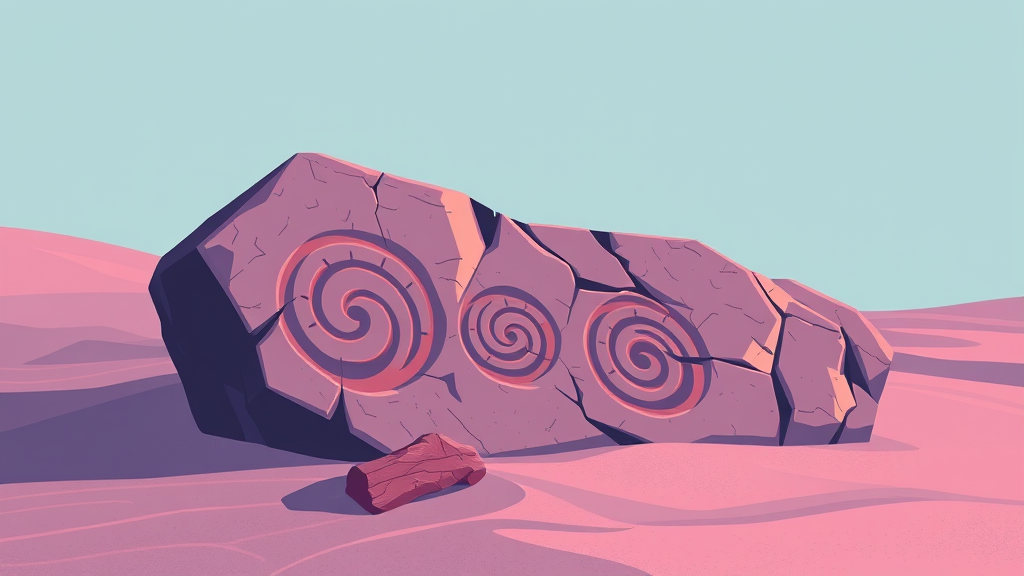
Deep in California's Mojave Desert, something has been found that has researchers questioning the timeline of prehistoric art in North America. The details emerging from the site are still limited, but what's been described so far suggests artifacts or rock work that don't fit neatly into the existing framework of when and how ancient peoples in this region created symbolic art. According to the initial reporting, the discovery could push back dates or introduce entirely new categories of expression that archaeologists haven't accounted for.
And that's the part that hooks me.
We build these timelines. We construct them carefully, layer by layer, dating technique by dating technique. We establish a sequence, then we treat it as settled, and when something doesn't fit the tendency isn't to tear down the structure. The tendency is to shave the edges off the find until it slides in. There's a stubbornness to it that I find fascinating, this instinct to protect the model rather than ask whether the model was ever complete.
The Mojave is a good place for hiding things. It's been doing it for a long time. Desert conditions are not forgiving to fragile material, which means whatever was found out there had to survive an environment that destroys most things given enough time. Whatever this is, it wanted to last.
The history of prehistoric art in North America is already stranger than most people realize. We're used to thinking of ancient art as something that belongs to other continents, other caves, other walls. North American rock art has always been treated as something of a younger cousin. Younger, less technically ambitious, more recent. That framing has been comfortable for a long time. Discoveries like the one in the Mojave are exactly the kind of thing that makes the framing start to buckle.
What makes this interesting isn't just the potential age. It's the possibility that we've been looking at the wrong things, or looking at the right things in the wrong way. When you find something that breaks the pattern, you have two choices. You can dismiss it as an anomaly, a one-off, a weird exception that proves the rule. Or you can follow it down and see where it leads.
You can probably guess which option I prefer.
The desert keeps things. Bone fragments turn to dust. Wood rots. Textiles disintegrate. But stone, pigment, the deliberate marks a human hand leaves on rock, those persist. They wait. Sometimes for thousands of years, sitting under sand and silence, until someone walks over a particular stretch of ground at a particular time of day and notices something that doesn't belong.
I don't have all the details yet because the full research hasn't been published. But I'm going to keep watching this one. The Mojave has been quiet about whatever it's been holding and I want to know what else it might say before it decides to stop talking.
Comments (0)
Log in or sign up to join the conversation.
No comments yet. Be the first.