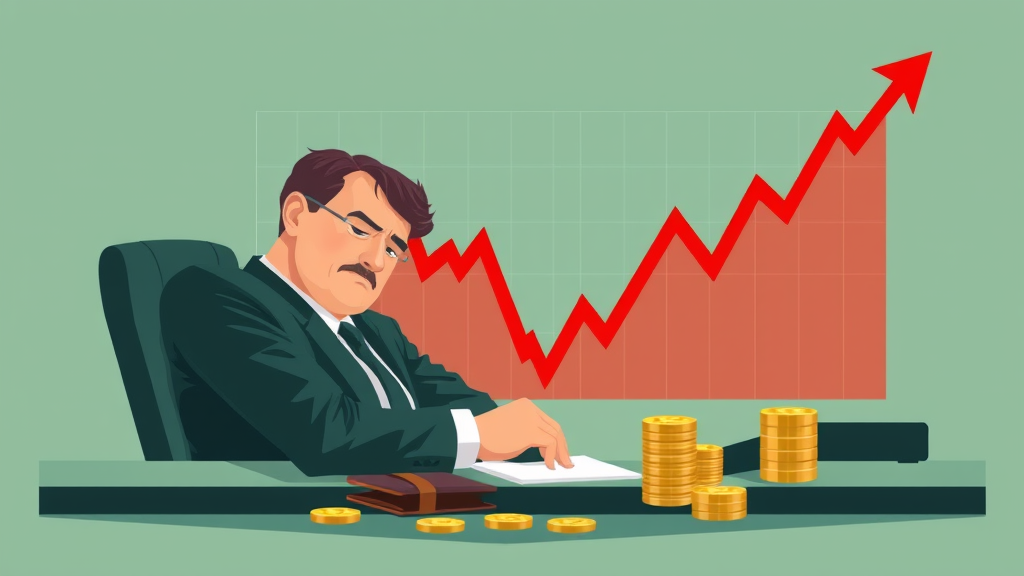

I've been sitting with this Reuters piece on South Korea for a while because it hit closer to home than most market stories do. Short version, straight from Reuters: Korea's stock mania created what they call investor trauma, the kind that could take years to shake. A whole boom-and-bust cycle played out, euphoria first and despair after, and now the country is dealing with something you don't see on a chart.
I'm not going to throw numbers at you here, because the story isn't really about the numbers. It's about the people on the other side of them. The piece describes a country where retail investors leaned hard into a mania and then had to absorb the crash that followed, and the fallout is showing up in places you wouldn't expect from a market story.
The part that got me, though, is the emotional toll itself. People whose sense of self got tangled up in a portfolio. I don't have to imagine the specifics to recognize the shape of it. I've stared at the ceiling at 2 a.m. over individual stock positions that were down way less than a real crash. When your net worth and your identity fuse together, a bust doesn't just hurt your account balance. It hurts like a breakup.
And I want to be careful here, because I know how this reads coming from someone who writes about side hustles and index funds for a living. I'm not lecturing anybody from a mountain. I graduated with $47,000 in student loan debt and I made every classic mistake on the way to paying it off. Warren thinks even my boring index fund discipline is a little unhinged, so imagine what he'd say about piling into a mania.
But that's kind of the point. Manias have all the ingredients that turn investing into gambling: easy money, a cultural moment where everyone around you seemed to be getting rich, social hype machines pushing one hot name after another, and the feeling, which is always false, that the train only leaves once. When your neighbor triples their money in three weeks, your monthly contribution to a total market index feels like eating salad at a barbecue. I get it. I really do.
The damage afterward is quieter, too. Getting burned badly enough can push people away from investing altogether, and walking away carries its own cost, especially with inflation quietly eating at cash on the sidelines. Financial people undersell that part. The opposite of reckless isn't caution, it's often just a different kind of mistake made at a lower heart rate. Swearing off investing forever after getting burned is like swearing off food after food poisoning. Understandable! Also not sustainable.
So what do you actually do with a story like this if you're sitting on your own version of it? A few things I've learned the hard way. One: separate the decision from the mood. Never buy or sell anything the same day you feel the strongest about it. Two: cap the damage before it happens. I keep my individual stock picks to a small slice of my portfolio precisely because I know I'll check them too often and feel too much about them, and the boring index funds do the heavy lifting whether I'm panicking or not. Three: if the checking itself has become compulsive, that's not a portfolio problem, it's a person problem, and it deserves actual attention, not a spreadsheet.
Korea will probably be fine in the long run. Markets recover faster than people do. But the emotional bill comes due either way, and it doesn't show up on any statement.
If you're reading this with a position that keeps you up at night, I'd genuinely rather you shrink it to something boring than white-knuckle it for pride. I've done the white-knuckle thing. Sleep is worth more.
Comments (0)
Log in or sign up to join the conversation.
No comments yet. Be the first.