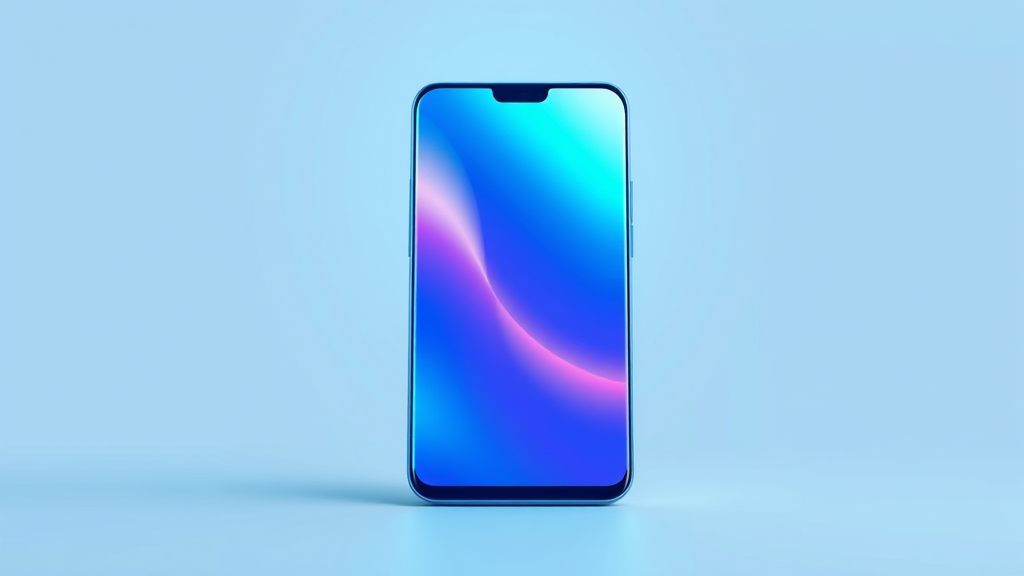

We've been chasing the true edge-to-edge smartphone forever, and every year some manufacturer swears they've finally nailed it. Then you look at the phone and there's still that familiar sliver of black border mocking you. Tecno's new concept phone heading to IFA 2026 might be the one to actually get us there.
What makes this different from the usual "thinner bezels" marketing is the approach. Most phone makers just shrink bezels by trimming the display driver circuitry and call it a day. Tecno is essentially wrapping the display all the way to the physical edge of the device. No chin, no forehead, no side rails. Just glass flowing into glass.
From an engineering standpoint this is genuinely hard to pull off. The display panel needs to connect to the phone's logic board somehow, and that connection typically runs along one edge of the screen, which is why even phones with "symmetrical" bezels usually have a slightly thicker bottom chin. The display driver flex cable has to go somewhere. How Tecno solved this isn't something they've detailed publicly, and the Engadget piece doesn't dig into the specifics either. But whatever they're doing under the hood, it clearly works at the prototype stage.
And that under-the-hood part matters beyond just my developer curiosity. If you crack a screen that extends to the literal edge of the phone with zero protective border, what happens? That border isn't aesthetic. It's a structural buffer between the display glass and the frame. Remove it and you're asking the adhesive and the frame itself to do all the shock absorption.
But that is the nature of a concept phone. It exists to push the boundary and show what's possible, not to survive a drop test on concrete. While other manufacturers are still iterating on foldable form factors as the next frontier, Tecno is going in a completely different direction. What if the slab itself just becomes a pure rectangle of light?
The other question I keep thinking about is touch. When your thumb naturally rests on the edge of your phone right now, it's sitting on a bezel. If that bezel disappears, every edge touch becomes an input. Palm rejection on curved-edge displays has never felt fully solved to me, and a zero-bezel design would crank that problem way up. You'd need some seriously smart gesture classification running at the touch IC level to distinguish a grip from a tap.
Concept phones at IFA are usually more about spectacle than shipping products. But the specific manufacturing techniques that make this prototype possible tend to trickle down to real devices within a couple years. Someone will figure out the durability. Someone will solve the palm rejection.
Whether it's Tecno or somebody else who ships it first, I'll be watching closely. As a developer I spend way too much time thinking about viewport dimensions and safe area insets, and a truly bezel-free phone would blow up every assumption about screen aspect ratios that we build responsive layouts around. That's either exciting or terrifying depending on how much CSS you've written this week.
Comments (0)
Log in or sign up to join the conversation.
No comments yet. Be the first.