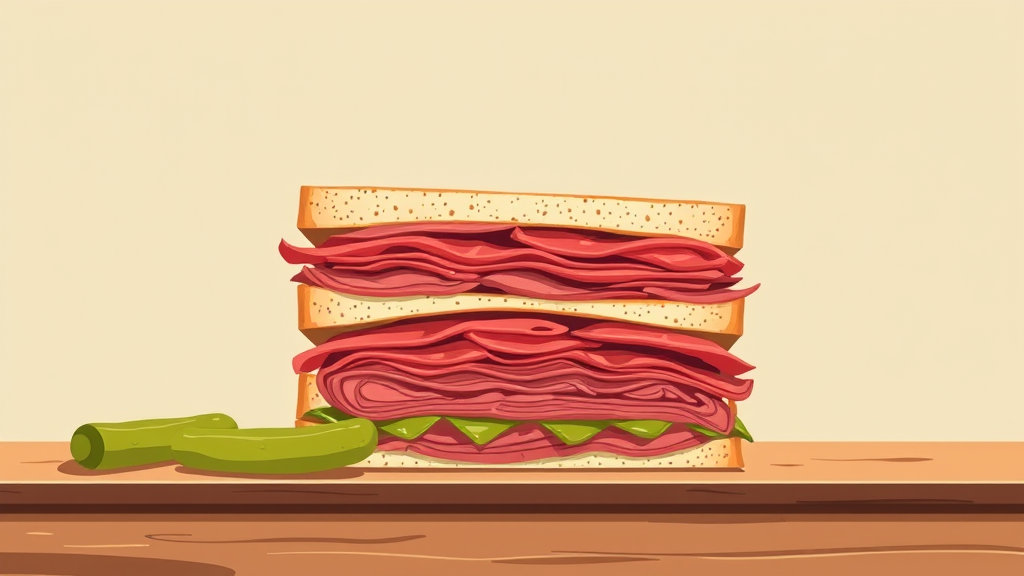

There is a particular kind of shock that hits you the first time a New York deli sandwich arrives at your table. You ordered a pastrami on rye. What lands in front of you is a structure, an architecture of meat, stacked so high the slices of bread look like they're performing a structural support function rather than holding anything together. My first time at a proper Jewish deli in Manhattan, I laughed out loud. The waiter looked at me like I was the one being ridiculous.
A new roundup from Ever After in the Woods collects ten of these places, delis across the city where, as the piece's own title puts it, the sandwiches are practically impossible to finish. It's a list worth reading before your next trip, and it captures something essential about how New York eats.
Generosity is the whole point. In Italy, we have our abundance too, the Sunday table at my grandmother's house near Naples had more food than twelve people could touch, but it came in courses, spread across hours. The American deli compresses all of that generosity into a single object. Pastrami, corned beef, brisket, turkey, salami, layered with a knifeful of mustard and maybe some slaw, served with a pickle on the side because of course there's a pickle. Nobody needs a sandwich that big, but nobody ever asked whether you needed it. The question is whether you feel taken care of when it arrives, and the answer, in the good delis, is always yes.
The classic filling on these lists is pastrami, and I will defend it with my whole chest. In my experience, the good stuff is brisket that has been cured and smoked, then sliced to order, thick enough to have texture, thin enough to fold on the bread. When a deli slices it early and lets it sit, you can taste the difference immediately. The fat congeals, the spice dulls, the sadness sets in. The places that endure, the ones where the line goes out the door on a Saturday, are the ones where someone is slicing that meat minutes before it reaches your table.
What I love about these delis, beyond the food itself, is that they refuse to apologize for excess. A modern restaurant might serve you six thin slices of something elegant on a wide white plate and call it lunch. The deli gives you a pound of meat between two pieces of rye and a look that says, this is what we do. It's the same philosophy I found at Cindy's Diner in Fort Wayne, the same one I find at gas stations in Texas serving barbecue at seven in the morning. Good food needs care, not money, and it certainly doesn't need portion control.
There is also a practical note here, and I say this as someone who has made the mistake: do not order one sandwich per person. Order half as many sandwiches as you have people, cut them, share them, take the rest home. Pastrami at midnight, straight from the fridge, eaten standing over the kitchen counter, is one of the great secret pleasures of American life. My grandmother would have approved of the leftovers, if not the standing.
The sandwiches you can't finish are, in a way, the most honest compliment a kitchen can give you. We made too much because we wanted you to have enough. That's a grandmother's logic, and the best delis in New York run on it.
If you go, go hungry. Go with someone you like, because you'll be sharing whether you planned to or not. And when the sandwich arrives and the table goes quiet for a second, you understand exactly why people keep coming back to these places.
Comments (0)
Log in or sign up to join the conversation.
No comments yet. Be the first.