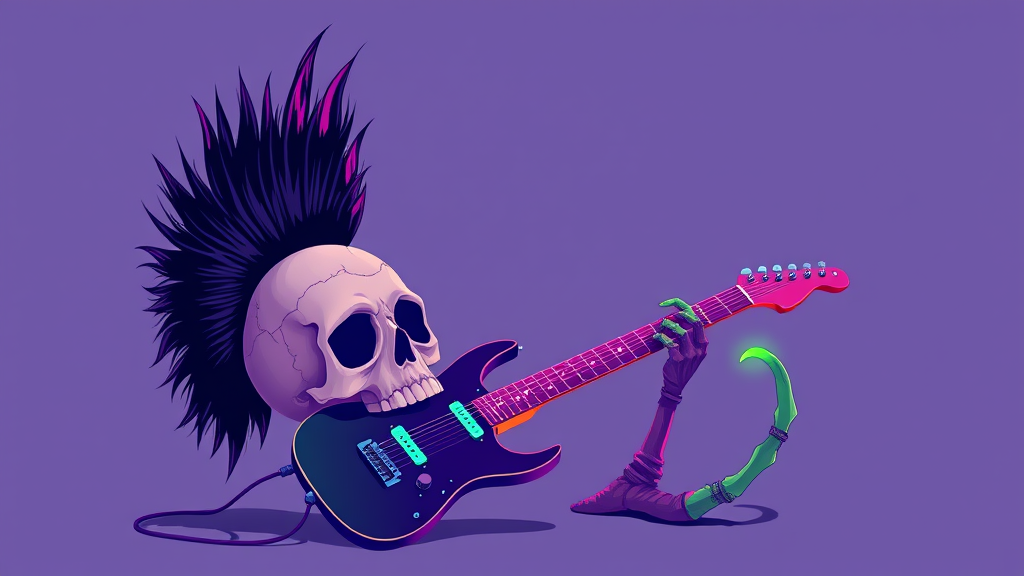

There's a band that formed in 1976 in Sacramento, California, and what they did with the next thirty-three years doesn't fit into any category anyone has invented. The Cramps took rockabilly, surf guitar, B-movie horror, fever-dream sexuality, and something you can only really call psychic damage, then welded it into a sound that shouldn't have worked but absolutely did. They called it "psychobilly" before anyone knew what to do with the word. Even that label feels too tidy.
Julian Marszałek, writing for The Quietus, spends a moment adjusting his towering quiff before walking readers through ten entry points into the band's discography. The piece understands you don't explain The Cramps. You open a door and let someone stumble through.
This is where I lose the thread in the best possible way. The Cramps were two people at the center: Lux Interior, who screamed and howled and writhed like a man possessed by the ghost of every sideshow performer who ever lived, and Poison Ivy, who played guitar with the precision of someone who had memorized every Link Wray lick and then decided to make them dangerous. They met in Sacramento in 1972. They were married for the rest of Lux's life. He died in 2009 of a ruptured aortic aneurysm, and the band ended with him, because there was no Cramps without both of them.
What Marszałek's piece gets right is that The Cramps demand a specific approach. You don't start at the beginning and work forward chronologically like some dutiful historian. You find a door and you walk through it. His ten picks stretch across their catalog, from the early CBGB-era singles that sounded like they were recorded inside a flooded basement to the later albums where the production got cleaner but the spirit stayed feral.
And the thing I keep coming back to is how the band operated completely outside every movement happening around them. Punk was happening, and they were adjacent to it, shared stages with it, but they weren't really part of it. They weren't new wave. They weren't hardcore. They were something older and stranger, like a transmission from a parallel version of American music where everything went slightly wrong in the most interesting way possible. Old garage 45s. exploitation movie soundtracks. Rockabilly records so obscure that tracking them down became its own archeology.
I went through a phase, probably around 2018, where I listened to nothing but Songs the Lord Taught Us for three weeks straight. You put it on at 1 AM and the room changes. The whole thing just careens, opening with "TV Set" and never really letting up from there.
What's strange about The Cramps is that they should feel dated. The aesthetic is so specific, so rooted in 1950s trash culture and 1960s exploitation, that by all rights it should feel like a period piece. But it doesn't. It feels current in a way that's hard to explain, because underneath the aesthetic they understood something fundamental about spectacle and excess and the willingness to be completely, unapologetically strange. That never goes out of style because it was never in style to begin with.
Marszałek's list is worth your time even if you've never heard a single Cramps song, especially if you've never heard a single Cramps song. Pick one. Any one. Put it on with the lights off. See what happens to the room.
The questions are always better than the answers with a band like this. What were they actually chasing for thirty-three years? I don't think even they knew. Which is exactly what makes it worth following.
Comments (0)
Log in or sign up to join the conversation.
No comments yet. Be the first.