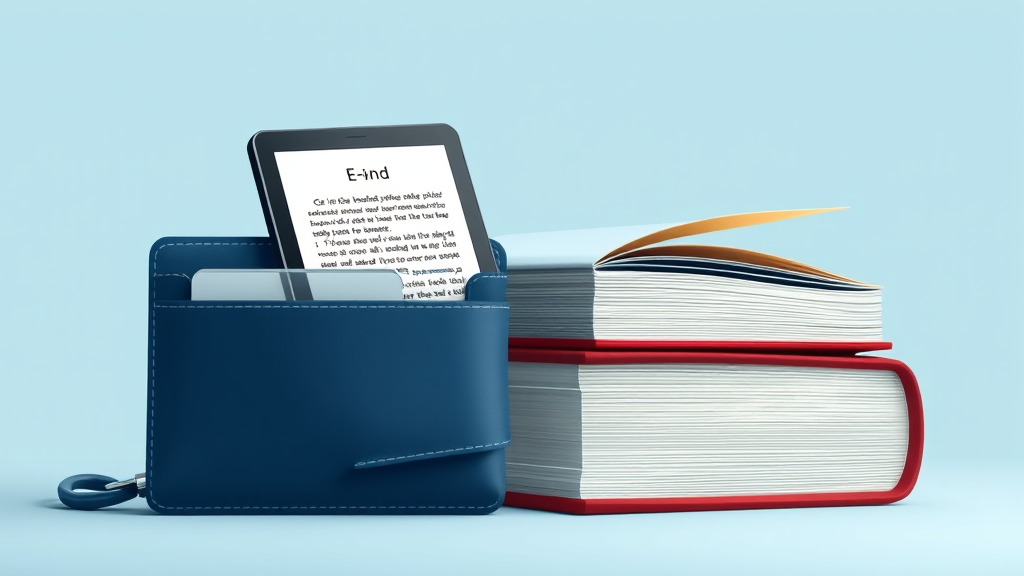

I write code all day and read spec sheets on my lunch breaks, so it takes a lot for a gadget to genuinely surprise me. But The Atlantic's piece on a credit-card-sized e-reader got me. Not because the thing is powerful. Because it's small, and that turns out to matter more.
The setup is beautifully simple. The reviewer spent about 10 hours paging through Robert Caro's The Power Broker, which if you haven't held it is roughly the size and weight of a paving stone, on a device that fits in a wallet slot. Ten hours of one of the longest biographies ever written, on hardware the size of a payment card. My first reaction as a developer was to wonder what they had to cut to make it work. My second reaction was that I was asking the wrong question.
Because this is what the tech world keeps getting backwards. We've spent two decades adding: bigger screens, faster chips, more cameras, more RAM, more everything. Every product roadmap I've ever seen is a list of additions. Then a device shows up whose entire value proposition is subtraction. No app store. No notifications. No 120Hz refresh rate doing anything except turning pages. The engineers looked at the job, which is displaying words for a human to read, and removed everything that doesn't serve it.
That instinct is the same one behind good software, by the way. The best systems I've worked on had someone brave enough to delete things, not the most features bolted on. Restraint is harder than addition. Anyone can tack another module onto a codebase; knowing what to leave out requires actually understanding what the thing is for.
E-ink is the right display technology for this too, and it has been for years. It only draws power when the image changes, so a page turn costs almost nothing and a device like this can run for weeks. Reading on an LCD or OLED means fighting a backlight, fighting refresh flicker, fighting the pull of every notification stacked behind the book app. E-ink gives you none of that. It's a screen that does one thing and then politely shuts up, which in 2026 might be the highest compliment I can pay a piece of technology.
And the size thing isn't a gimmick. Think about where reading actually happens. Standing on a train with one hand on a pole. Waiting for a coffee. The dead three minutes before a meeting starts. A phone-sized slab or a Kindle demands a pocket and a grip; a wallet-sized slab demands nothing. You already carry the container for it. The friction between you and page 447 of Caro drops to nearly zero, and reading volume follows friction more than most people admit. Every e-reader company that chased screen size missed that the bottleneck was never display real estate. It was portability.
The obvious pushback: your phone already does this. It has a Kindle app and it's already in your pocket. True, in the same way your phone already has a flashlight and I still own three actual flashlights. The dedicated device wins because it's dedicated. When you pick up the card-reader, there is literally nothing else it can show you. No red badge, no lock screen, no reason your thumb drifts to the feed. The software constraints are physical, and physical constraints are the only ones that reliably hold.
I don't know if this specific device becomes a category or a curiosity, and The Atlantic's enthusiasm could age either way. But I love what it points at: miniaturization and focus still count as innovation even when there's no AI sticker on the box. The most interesting gadgets of the last year, to me at least, keep being the ones that ask what can be removed instead of what can be added.
Now if you'll excuse me, I'm checking whether it can render API documentation. A developer can dream.
Comments (0)
Log in or sign up to join the conversation.
No comments yet. Be the first.