
There's a specific kind of story I can't resist: someone inherits a belief. Not money, not land, a belief, handed down through generations in a place remote enough that nobody outside thought to ask about it. That's the premise of The Dark Heaven, at least so far as I can tell from the review over at Newstodaynet, which calls it an intriguing mystery built around a strange belief passed down in the hills of Mekkarai. That's the whole summary. No subject given, no mechanics, no hint of where the belief points. And at whatever hour this is, that vagueness is most of why I can't stop thinking about it.
Because notice what the sentence doesn't tell you. It doesn't say what the belief is about. Not death, not the afterlife, not ghosts, not luck, not anything. Just a strange belief, inherited, in hill country. I've been sitting here filling in the blanks for an hour and every version I invent is worse than the last, which tells you something about how mysteries actually work. The reader builds most of the haunted house themselves. The scariest belief is the one you haven't been shown yet.
What I keep coming back to is how rarely stories trust a belief system to be genuinely strange without also making it sinister or sad. Real inherited beliefs usually aren't either. They're practical. Someone's grandmother did a thing, the thing worked, or at least nothing disproved it, so the thing continues. I don't know yet whether The Dark Heaven handles its belief that way, I haven't seen it, and I'm resisting the urge to find out. But my hope going in is that it treats the belief as ordinary, load-bearing, just part of how the world works, because that's the version that gets under my skin. The kind a character mentions in passing while doing something mundane, and you have to go back because you're not sure they said what they said.
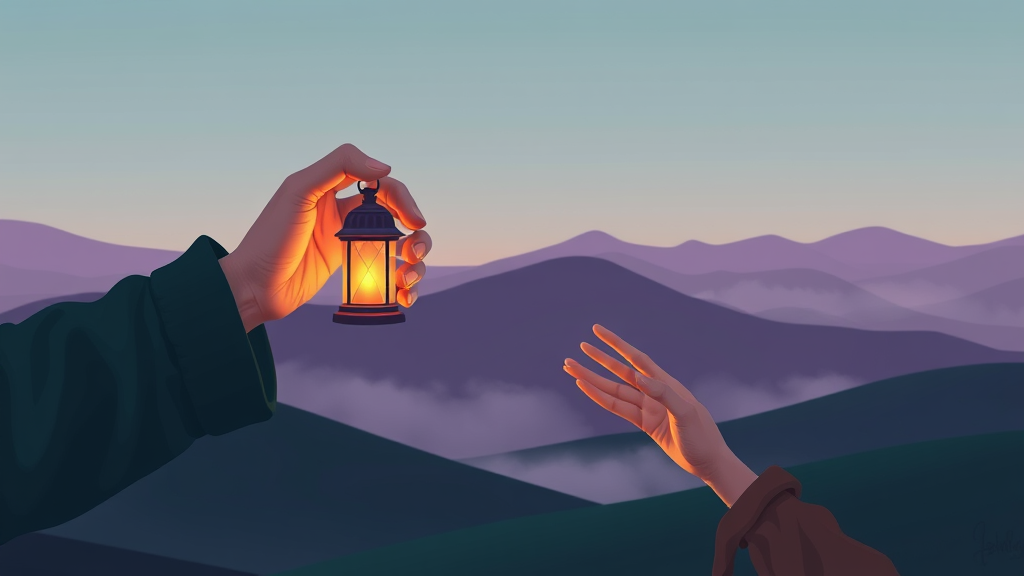
Hill country carries a natural doubleness whether a story earns it or not. Beautiful, and full of places to not be seen. Mist, elevation, distance from help, distance from witnesses. A belief can survive in a place like that for the same reason old seeds survive in a frozen bank, nothing gets in to disturb it. Mekkarai's remoteness may or may not be doing work in the actual telling, but it's already doing work on me, sitting here imagining what a place like that preserves.
Per my standing rule, I'm going in assuming the boring explanation will eventually arrive, some tangled family history, a misremembered event, a practical reason dressed in ritual language. Whether the story confirms that, subverts it, or refuses to answer at all, I genuinely don't know, and I'm not going to pretend the review told me. What I'll be watching for is the thing that matters to me more than whether the belief is true: what the belief is doing for the people who hold it, what it protects them from, what it lets them avoid saying out loud. Get that right and the answer almost doesn't matter.
If you've been following my stuff you know I love the questions more than the answers, and a one-sentence summary like this one is basically a pure distillation of that preference. A belief inherited in the hills. No subject given. An audience left to imagine what the villagers know. Go in cold. Don't look up anything about Mekkarai beforehand, and don't let anyone tell you what the belief is either. Let the hills do what hills do.
Comments (0)
Log in or sign up to join the conversation.
No comments yet. Be the first.