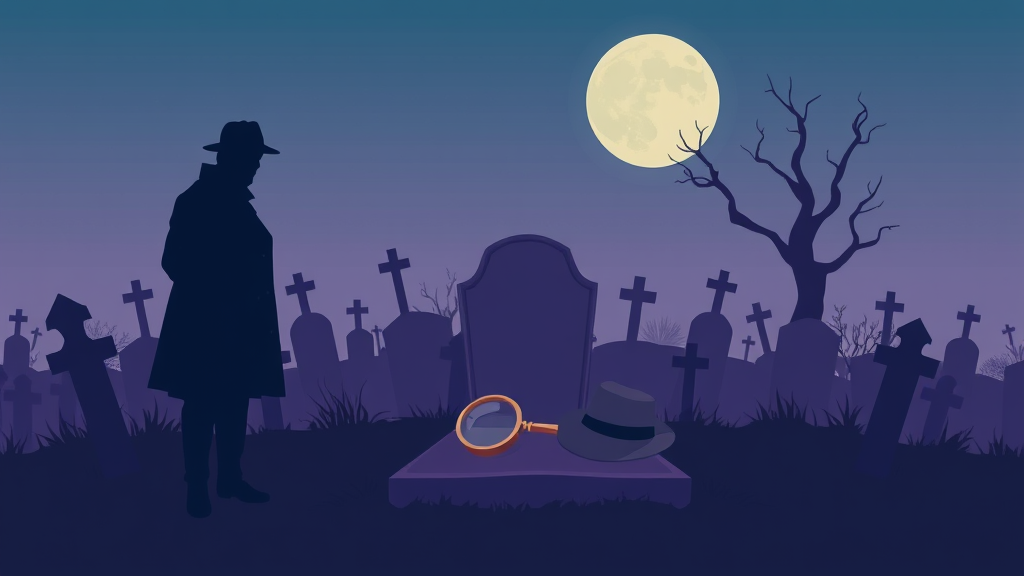

I watched the season 2 premiere of The Detective Is Already Dead at about one in the morning, which is either the right way or the worst way to watch a show about a dead girl who keeps leaving instructions. The episode, which you can read about in the full recap over at MSN, opens the way a lot of good ghost stories do: with a visit to a grave.
Kimihiko and Nagisa travel to Siesta's resting place, and the show treats the graveyard sequence with real patience. No rush, no exposition dump, just two people standing over the headstone of the person who organized both of their lives and then exited by dying. The whole series runs on that premise, and the premiere understands it only works if you keep feeling the absence. Siesta, the self-declared great detective, has been gone since the first season, and the show has never once let that land as settled fact. Dead, in this story, is a negotiating position.
Because of course there's a message. There's always a message. Siesta left behind a final communication, the kind of thing you set up when you know you're going to die and you want to keep steering events from the far side of the grave, which reads as deeply romantic or faintly manipulative depending on how charitable you're feeling at one in the morning. The message points Kimihiko toward something, and the something turns out to be a discovery the episode frames as shocking, and I'll keep the specifics vague here because a recap shouldn't do the episode's job for it.
What I will say is that the premiere also throws in a kidnapping, because apparently a grave visit and a mystery inheritance weren't enough incident for twenty-some minutes. Someone gets taken, and the episode doesn't tell us who's behind it or why, which is the correct choice. Explaining too early is how these shows die. The first season worked by withholding, by letting Kimihiko narrate around the hole Siesta left, and season 2 seems content to keep that wound open and let things fall out of it.
Nagisa remains the interesting variable. She's grieving someone she came to know through Kimihiko's stories as much as through her own time with her, and the show keeps hovering on the question of what she is in all this: successor, tagalong, or her own person stuck in a dead woman's shadow. The premiere doesn't resolve any of it, but it stages the grave visit so the question is sitting right there in the frame the whole time. You're watching two people mourn the same absence from two very different distances.
That's the engine of the whole thing, really, and it's an unusual one. The Detective Is Already Dead is a mystery where the central mystery is a person, and the person is unavailable for comment. Every clue Kimihiko digs up about whatever scheme she was running before she died doubles as a clue about who she was, and those two investigations can't be separated. The final message is the clearest example. It's a case file, a love letter, maybe an apology, and the show trusts you to notice all three without underlining any of them.
I've written before about how the best mysteries keep their questions alive longer than their answers, and this premiere is a clean example of that discipline. Nothing gets closed. The grave gets visited, a person gets taken, a message gets delivered, and every one of those events opens a door rather than shutting one.
Siesta's still dead, technically. But you don't leave a final message unless you expect it to be read, and you don't build a second season around a corpse unless the corpse had plans. I'll be watching to find out what she set in motion, and I'd bet the answer is worse than anyone in the show thinks.
Comments (0)
Log in or sign up to join the conversation.
No comments yet. Be the first.