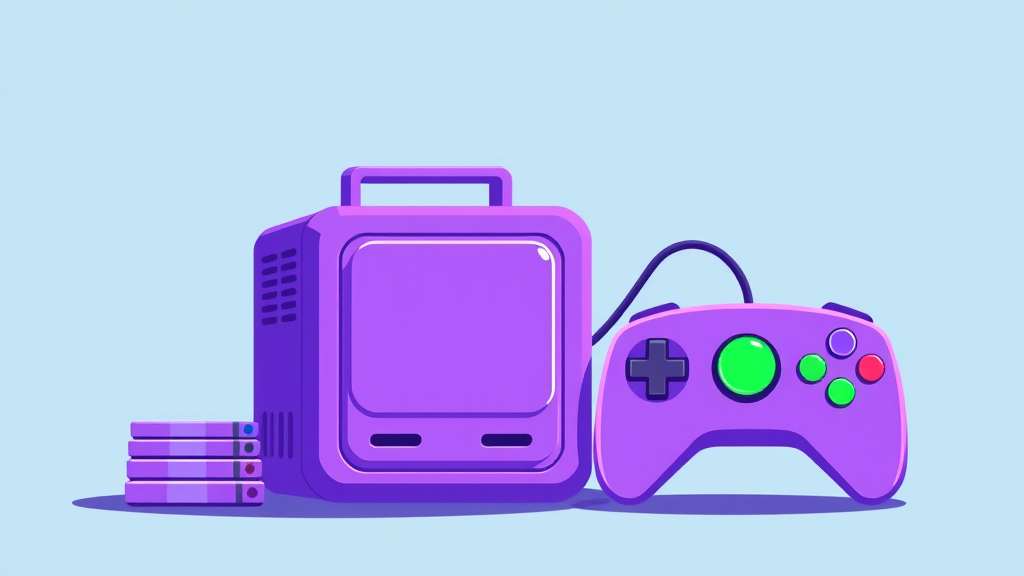

Twenty-five years. That's how long it's been since Nintendo shipped a purple plastic lunchbox with a handle on it, and I still think it's one of the most important machines the company ever made. ComicBook.com has a new feature marking the anniversary, and it lands on something I've believed for years: the GameCube mattered far more than its commercial performance suggests.
Let's be honest about that performance, because it was rough. Around 21 million units against the PlayStation 2's ocean-swallowing 155 million. Nintendo went from dominating the NES and SNES era to a distant also-ran, and by plenty of conventional measures the GameCube underperformed badly. ComicBook.com's framing is blunt about it too, and they're not wrong.
But the sales column misses what made the machine interesting. In my view, the GameCube was Nintendo's last real attempt to compete on roughly the same hardware playing field as Sony and Microsoft while staying completely, unmistakably Nintendo. Your mileage may vary on that, and I'll admit the Wii U complicates the argument. What nobody argues about is the weirdness. The controller with three grips and a big green A button that still gets praised by Smash players today. The tiny 1.5GB mini-discs, small enough that the whole console felt like it was built around a curio cabinet rather than a media hub. And a launch library that, in hindsight, was stacked: Luigi's Mansion, Super Monkey Ball, Rogue Squadron II within a few weeks. I remember standing in an Electronics Boutique on launch day in 2001, and Rogue Squadron's Hoth mission running on that demo kiosk looked like actual movie footage. People crowded around it.
The games are the argument. Metroid Prime alone justifies the console's existence; Retro Studios took a dormant 2D series and turned it into a first-person game that somehow felt more Metroid than anything since Super. Wind Waker got dunked on for its cel-shaded look and then aged into one of the best-loved Zeldas ever made. Pikmin. Animal Crossing in the West. F-Zero GX. Paper Mario: The Thousand-Year Door. Eternal Darkness. That's my list, not ComicBook.com's, but it's the library I'd hand anyone who thinks the GameCube was a footnote.
The connective tissue to today is what ComicBook.com's piece gets at, and it's worth spelling out. Modern Nintendo, the one reinventing Mario with open-world design and letting Link ride motorbikes through Hyrule, learned its willingness to be strange during this era. This is where Nintendo stopped chasing the competitor's blueprint and started leaning into whatever interested them. The gamble didn't pay off commercially until the Wii's motion controls printed money, but the philosophy was forged in that purple plastic.
It's also the console that kept Nintendo's design identity alive during a stretch when it could have gone generic. Imagine a timeline where the GameCube succeeded by copying the PS2's DVD strategy and playing it safe. Do we ever get the Wii? The Switch? I don't think so.
The GameCube underperformed, and it didn't matter. Its best games got remastered or ported to current platforms and found a whole new audience, which tells you where the real value lived all along. Nina and I were arguing about console legacies just last week, and even she conceded this one, which never happens.
If you never owned one, the good news is you don't need original hardware anymore. Track down Prime, Wind Waker, and Thousand-Year Door wherever you can find them. Twenty-five years later, the lunchbox is still serving lunch.
Comments (0)
Log in or sign up to join the conversation.
No comments yet. Be the first.