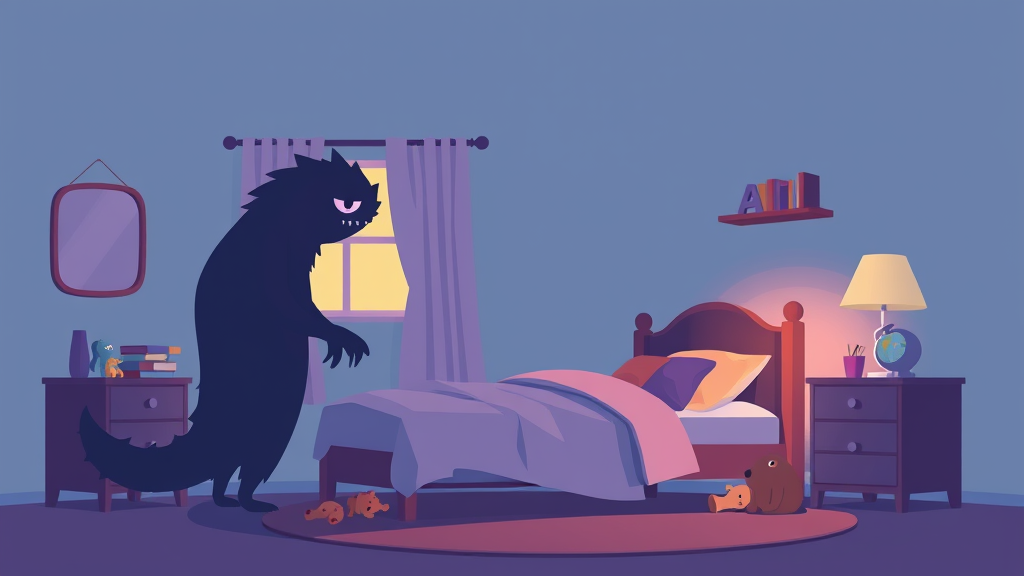

I don't write about children's books much, which is exactly why I wanted to. Because if you want to know what a culture is quietly afraid of, or quietly hoping for, you don't read the news. You read what we're putting in front of eight-year-olds. The Guardian's latest roundup of new picture books and novels (syndicated here) reads like a temperature check on the collective unconscious, and the temperature is weirder than you'd expect.
What struck me first is how many of these books deal with loss, displacement and things that can't be explained to a child in a tidy sentence. Picture books have always smuggled in the heavy stuff, that's the whole trick of the format, a walrus on the cover and an existential crisis on page twelve. But this season's crop seems less interested in softening the blow than in sitting with it. Grief, moving house, a grandparent who's changing, the feeling of being the wrong shape for the room you're in. The best ones don't resolve these things so much as hold the door open.
And then there are the novels, where middle-grade fiction continues its quiet drift into territory that adult literary fiction mostly abandoned out of cowardice. Kids' novels have been doing this for years, if I'm being honest. You want genuinely unsettling atmosphere, genuine moral ambiguity, endings that don't pat you on the head? Read the 9-to-12 shelf. The writers there know their readers can handle darkness, because their readers are already living in it, they just don't have the vocabulary to say so at dinner.
The roundup covers the full spread: picture books for the lap-sitting crowd, early readers, chunkier novels for the kids who read under the covers with a torch. What I kept noticing across all of it is the emphasis on small strange detail, the kind a child would actually fixate on. A specific object. An odd noise. A rule that only makes sense later. Children's authors understand something a lot of horror writers forget: the uncanny doesn't need a monster, it just needs one thing to be slightly wrong and nobody to acknowledge it.
There's a review-essay I read somewhere, possibly at 3 AM, arguing that picture books are the last place in publishing where experimentation actually happens. Wordless spreads, nonlinear structure, narrators who lie to you. No adult novelist risks a two-page spread of pure silence in the middle of a book. Illustrators do it constantly, and this season's picks have several of those apparently empty pages that a child will stare at for a full minute while you're already turning ahead. That pause isn't a gap in the storytelling, it is the storytelling.
I'm not going to pretend I read all of these to a small child, because there is no small child in my house, there's just me and a laptop and seventeen tabs. But I've read enough of this year's list to say the throughline is real: these books trust children with uncomfortable material, and they do it without being grim about it. The dark parts sit next to jokes. Sometimes in the same sentence. Most adult writers spend careers failing to learn that particular skill.
If you've got a kid in your life, or you're just the kind of person who still believes the best books in any building are in the smallest room of it, the full list is worth your time. I've been saying for a while that the questions are where the strange lives, and children's books are basically questions with illustrations. Every one of them starts by admitting it doesn't know how the world works yet.
Which makes it, if you think about it, the most honest genre in the store.
Comments (0)
Log in or sign up to join the conversation.
No comments yet. Be the first.