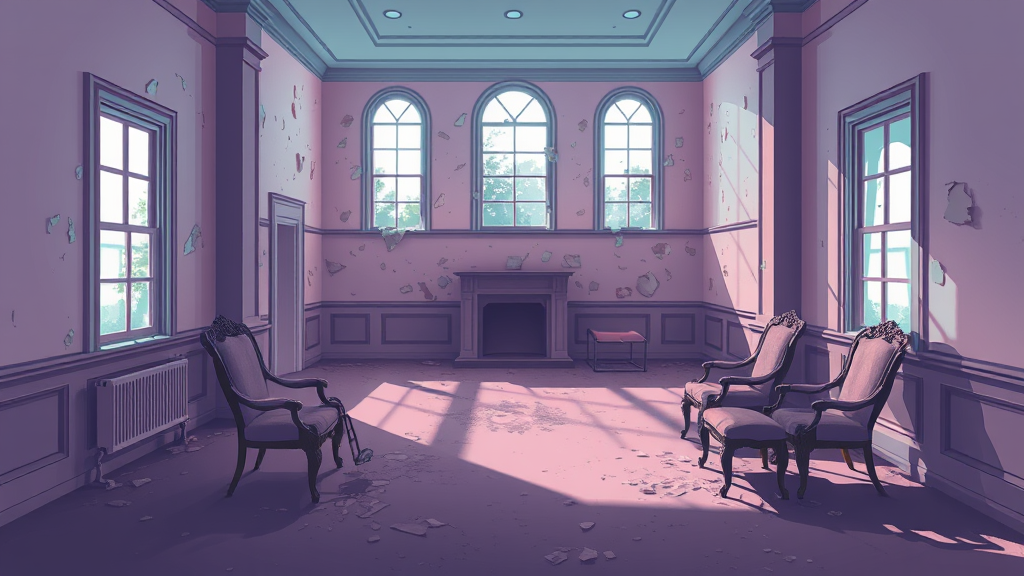

It starts the way these things always start. You see one photo, maybe a peeling mansion in Belgium or a hospital in Pennsylvania with a wheelchair still parked in the hallway, and something in your brain hooks itself and won't let go. Yahoo Style put together a collection of abandoned homes and buildings people have found and documented around the world, and I've been scrolling through it at an hour I won't admit to, because of course I have.
The scale of it is the first thing that gets you. There aren't a handful of these places. There are thousands. Whole villages, individual mansions, hotels, schools, apartment blocks where someone's curtains still hang in the window decades after the last tenant left. The collection spans continents and there's no single reason any of them emptied out. Bankruptcy. Disaster. War. A family line that simply ended and nobody came to claim the house. Sometimes the reason is documented and sometimes the reason is the mystery, and you probably already know which ones I care about.
Because the objects are where it stops being photography and becomes archaeology of the very recent past. A table set for a meal that never happened. A child's bicycle rusted to a porch. Libraries with the books still shelved, organized by a hand nobody's shaken in forty years. There's a clinical term for this, "urbex," urban exploration, and the community around it has ethics most people don't expect: don't break in, don't take anything, don't vandalize. You document and you leave. It's grave-visitor behavior applied to buildings, which I think is exactly right, because that's frequently what these places are. Graves for a version of a life.
And the houses specifically. I keep circling back to the houses. A mansion or a factory you can understand; institutions fail at institutional scale. But a house means somebody owned it, and then somebody stopped owning it, and the stopping usually happened fast or quietly enough that the furniture stayed. Nobody leaves a piano behind on purpose. The piano is the tell. When you see a grand piano sitting in a house that's been empty since the seventies, you're looking at a family's worst week, preserved in dust.
The decay itself does strange work too. Nature moves back in faster than you'd think, roots lifting foundations, moss claiming staircases, an indoor tree growing through what used to be a dining room. There are places in the collection where the greenery has swallowed the structure so completely you have to study the photo to find the windows. It's beautiful and it's uncomfortable at the same time, watching the planet calmly repossess something we were sure was permanent.
What I keep coming back to is the question I can't answer, which is my favorite kind. Not "why was this abandoned," because the answer is usually mundane and sad. But "what did the last person through that door think they were doing." Did they know it was the last time? Almost never. The last person to lock a door never knows it's the last time. Every one of these buildings has that exact moment buried in it somewhere, an ordinary person stepping outside with keys in their pocket, and the building just... waiting.
Some of them wait for decades. Some of the places in the collection have been standing empty since before I was born, full of someone else's belongings, holding their shape against the weather out of what I can only describe as stubbornness. Go look at the photos. But maybe not right before bed.
Comments (0)
Log in or sign up to join the conversation.
No comments yet. Be the first.