
I don't trust a garden. I know that's an odd way to open a piece about the world's most beautiful gardens, but stay with me, because Travel + Leisure just put together a collection of gardens from around the world and I went in expecting pastels and came out thinking about control.
A garden, when you really look at one, is a person arguing with nature and winning, temporarily. Someone decided, decades or centuries ago, that this plant belongs here and that one doesn't, that water should fall exactly there, that a hedge should take this shape and no other. Then other people spent their entire lives maintaining the argument. Some of these gardens have outlived the people who made them by hundreds of years and the argument just keeps going, hedge by hedge, nobody alive remembering who started it.
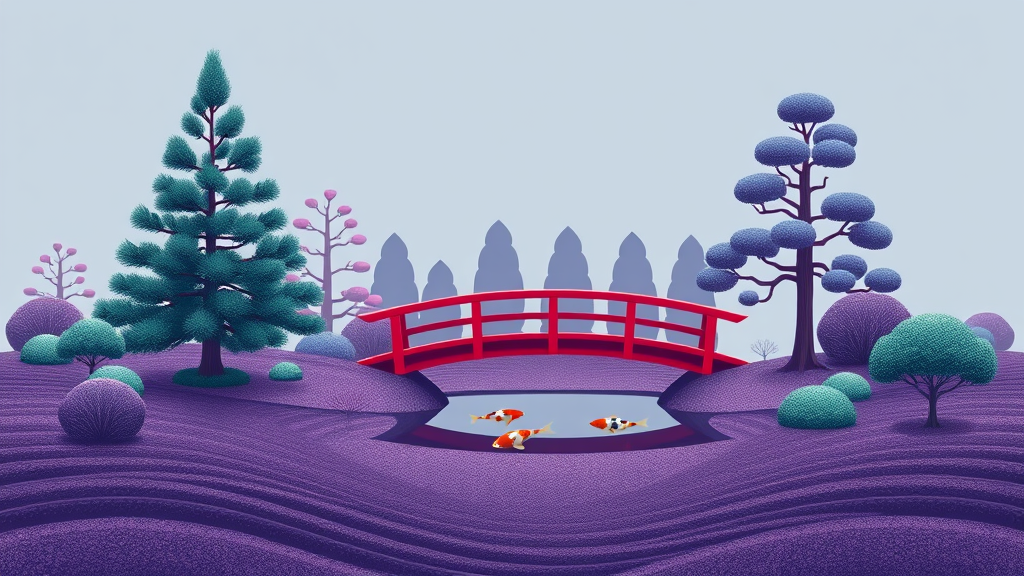
The collection spans the planet, and the range is what gets you. Gardens carved into desert canyons. Gardens hanging off the edges of European palaces. Gardens in Japan where the moss is far older than anyone standing on it and the whole point is that nothing looks arranged even though everything is. Japanese garden design in particular operates on a level of intent that borders on the unsettling; every stone was placed, every "wild" cluster of maples was curated, and the moss under your shoes has been tended longer than most family lines survive. It looks like accident. It is the opposite of accident.
And then there are the European formal gardens, the Versailles-types, where the geometry is the message. Walk one of these on a quiet morning and you feel something close to awe but not quite, something closer to mild dread, at the sheer scale of human insistence. Thousands of gardeners, generations of them, clipping a single landscape into a shape one dead person imagined. Landscaping doesn't cover it. It's a haunting with topiary.
The desert gardens might be my favorites in the whole set, because they're the most honest. Building a lush garden in an arid place is an act of pure stubbornness, and the best ones stopped fighting the climate and started collaborating with it, agave and cactus and stone arranged so the shade does half the work. I'm not going to insult you by spelling out the lesson in there.
What I kept circling back to, reading through the list at an hour I won't admit to, is how many of these places were built by people who knew they'd never see the finished version. You plant an oak avenue knowing the shade will arrive for your great-grandchildren. You train wisteria over a frame knowing the famous cascade of purple can take decades to peak, longer than the gardener who built the frame has left. Somewhere right now someone is planting something whose best day will happen in 2086, for strangers.
I wrote recently about a woman rebuilding her grandmother's garden from memory, and how the layout her family remembered turned out to be wrong. Gardens do that. They record us and then they keep growing after our memories fail, which makes them maybe the only monuments that get more alive the less we understand them.
So yes, go look at the list. Save it for a trip. But when you're standing in one of these places, do what I do: find the oldest thing in the garden, the gnarled tree, the moss that was old before your grandmother was born, and ask yourself who touched it last before you. Because someone did. And the garden kept the secret.
Comments (0)
Log in or sign up to join the conversation.
No comments yet. Be the first.