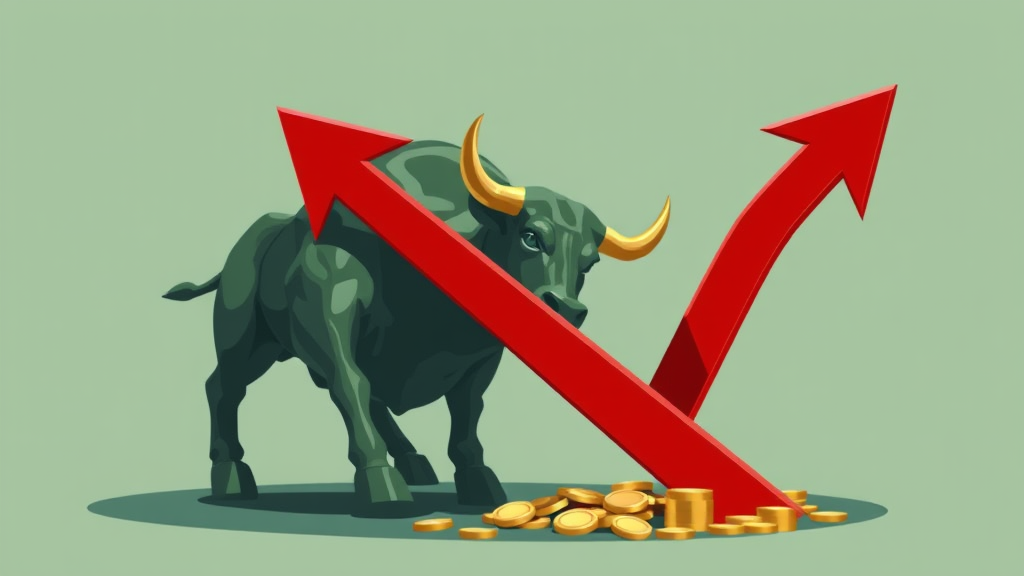

AOL, in a piece you can read here, reports that roughly three in four Americans believe a stock market crash is coming, and offers four ways to protect a portfolio without missing out on gains. I'll leave their four ways to them and give you mine, but first, a word about the number itself.
I read surveys like this one the way I read weather forecasts from two weeks out. Directionally interesting, not actionable. People have expected a crash in nearly every year I've been investing. Sometimes one came. Usually it didn't arrive on schedule, and the people sitting in cash waiting for it paid for their caution in missed gains.
But let's take the fear seriously for a minute, because it isn't irrational. If valuations are indeed stretched, and there's a real debate about that, a pullback at some point is a reasonable expectation, not a fringe one. I've lived through 1987, 2000, 2008, and 2020. The market has always crashed again eventually. The question that actually matters is what you do about it beforehand.
Here's the math people skip. Say you're 40 years from retirement and you invest $500 a month. At an 8 percent average annual return, you end up with roughly $1.75 million. If you sit out three of those years waiting for a crash that never quite arrives, you end up somewhere around $1.35 to $1.4 million. Missing three years of contributions and compounding costs you roughly $350,000 to $400,000. Timing the market, even successfully once or twice, rarely beats staying in it. The real damage comes from the selling and the failure to buy back in, not the crash itself.
So what does real protection look like? Preparation, mostly. Prediction is the part nobody can do.
First, know your allocation. If you're 35 with 90 percent stocks, a 30 percent drawdown is uncomfortable but survivable. History offers a wide range of recovery times for steep drops, from under a year to the better part of a decade, so your age and timeline do most of the work here, not cleverness. If you're 62 and two years from retirement, that same allocation deserves a hard look.
Second, hold bonds or cash in the proportion your situation demands, and I mean actual cash at a real yield, not cash you'll raid for a sale at the mall. The purpose of that money is so you never have to sell stocks at the bottom, and that's the whole job.
Third, keep dollar-cost averaging. I know I sound like a broken record on this, but buying every month through a downturn is the closest thing to a free lunch the market offers. The long record of buy-and-hold research, and my own four decades of watching people try the alternative, says the person who kept buying through 2008 and 2009, mechanically, without heroics, generally fared better than the ones trying to be clever about it.
Fourth, and this is the one nobody likes, ask yourself whether your fear is really about the market or about your position sizing. If a crash would ruin you, you weren't invested. You were gambling. One stock is a bet. A diversified portfolio is a plan. If you've got too much in any single name, fix that on a calm Tuesday, not during a panic.
One question worth sitting with tonight: if the market dropped 30 percent next quarter, do you know, on paper, exactly what you would do? If the answer is no, that's more useful information than any survey percentage.
Fear is expensive when it drives decisions. So is comfort. The middle path is a plan written down in advance, followed boringly, for decades. It has worked through every crash I've watched, and I've watched all of them since the late '80s.
As always, this is my perspective after forty years of managing my own money, not professional financial advice. Talk to a qualified advisor about your specific situation.
Comments (0)
Log in or sign up to join the conversation.
No comments yet. Be the first.