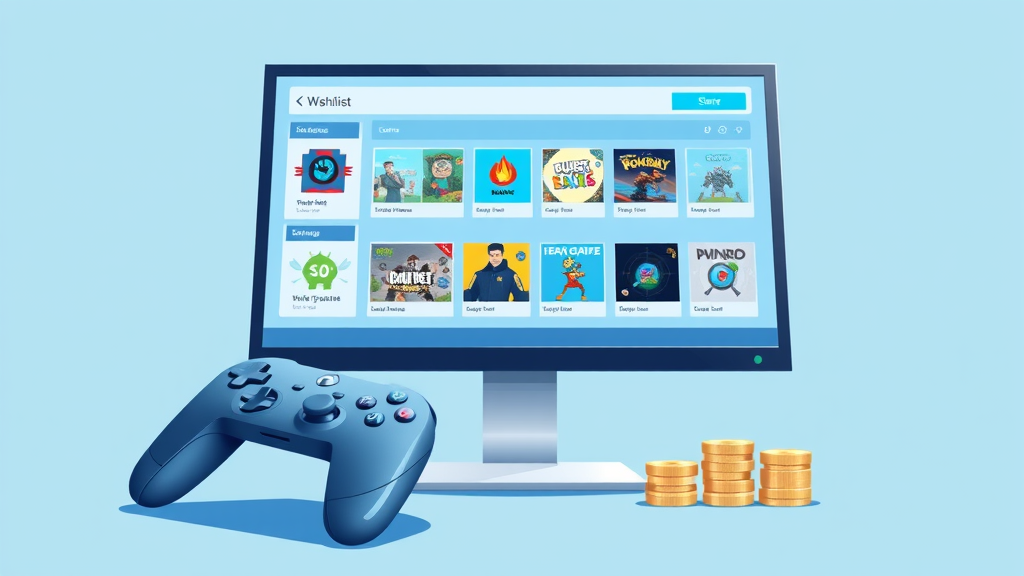

Valve is making real changes to Steam wishlists, and the timing tells you why. According to Geeky Gadgets' report, new release revenue on Steam dropped by about $390 million, and wishlist behavior sits right in the middle of that story. Wishlists have always been the quiet engine of Steam sales: they're the queue that fires the notification email when a game launches or gets a discount, and that email is widely considered one of the biggest sales drivers a mid-sized game gets all year.
So what's actually changing? The headline features are custom categories and better sharing. Players can now organize their wishlists into their own buckets instead of one giant reverse-chronological pile, which, if you've ever let a wishlist grow past 200 items, is a genuinely overdue fix. And sharing matters more than it sounds. A wishlist you can slice into "co-op games to play with my brother" or "buy when under $15" is a wishlist people actually use, and used wishlists convert.
The developer logic here is straightforward. Wishlist additions are the closest thing PC gaming has to a pre-order signal without money changing hands, and the discount-notification email is basically free marketing fired at a self-selected audience. If revenue from new releases is down $390 million, part of the diagnosis is that the wishlist funnel got stale. Players park games and forget them. The list became a graveyard, not a queue.
Custom categories attack that directly. Think of it like refactoring a messy codebase: nobody wants to touch a 4,000-line function, but split it into named modules and suddenly people can work with it again. A wishlist that's organized is one people revisit, and revisiting is where the purchase happens. My hunch is Valve is chasing some cohort of users whose wishlist engagement collapsed as their lists grew, and these features are the fix aimed straight at them. I have no internal data on that, to be clear. It just smells like the kind of thing you'd build in response to.
There's a market-context piece too. Anyone who opens the Steam storefront knows release volume is relentless, and attention is the scarce resource. When everything is shouting at once, discovery tools ARE the storefront. Valve has spent years nudging its discovery and recommendation machinery forward in various forms. My general sense is wishlists were the odd one out, a feature that felt frozen in time compared to everything around it. This update closes that gap.
For developers, especially small ones, the practical takeaway is that wishlist drives just got more valuable. A player who adds your game to a named category like "play at launch" is signaling harder intent than someone who clicks the generic button and never scrolls that far again. Expect the marketing advice to shift: encourage players to categorize, not just add.
Worth watching whether Valve exposes any of this through the API, because developers live and die by wishlist analytics in their Steamworks dashboards, and custom categories would be a goldmine of intent data if it's surfaced. If it stays player-side only, that's a missed opportunity.
And as someone whose own wishlist is currently sitting at 347 items I will never finish, yes, I'll be building categories this weekend. Probably. Right after I finish debugging this one service. There's always one more service.
Comments (0)
Log in or sign up to join the conversation.
No comments yet. Be the first.