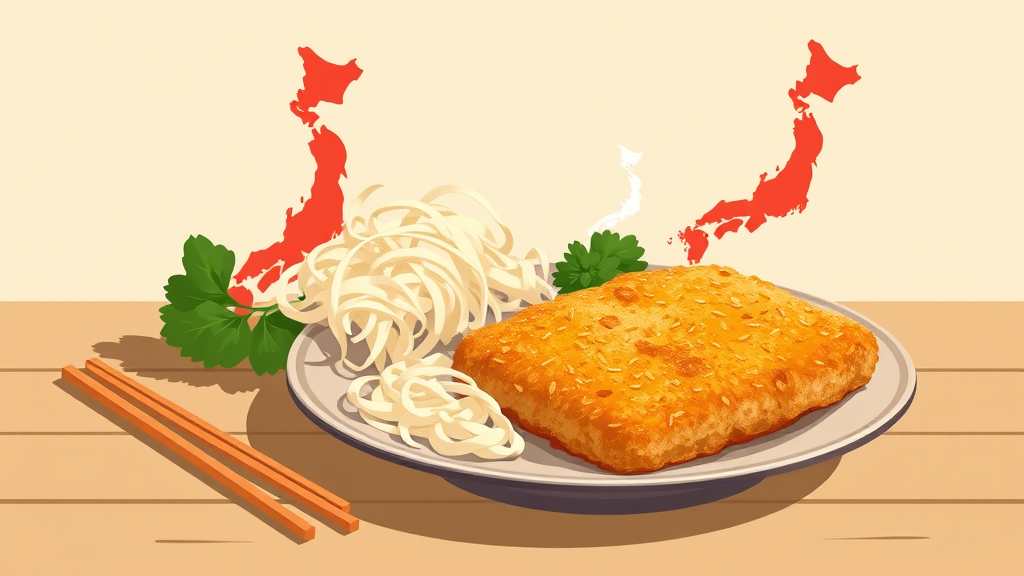

Every food culture has its pilgrimage dishes, the ones people plan entire trips around. In Japan, tonkatsu earns that devotion. A Japanese food writer recently published a guide on Note treating the great tonkatsu shops of the country as holy sites, and I read the whole thing twice with my morning coffee, nodding like a man in church.
Because tonkatsu, forgive me, I have feelings about it: it looks like the simplest dish in the world. A pork cutlet, breaded, fried. A child could describe it. And yet the distance between a mediocre tonkatsu and a great one is the distance between a postcard of Naples and Naples. The crust shatters or it doesn't. The pork inside stays juicy, rosy at the center in the best shops, or it dries out into something you drown in sauce out of sadness. The oil is clean or it carries the ghosts of ten thousand cutlets fried before yours.
The guide walks through what separates the masters, and most of it comes down to patience and refusal. The good shops refuse to rush the fry. They cut the pork against the grain with intention. Some age their panko, some grind their own, some insist on specific heritage pork, kurobuta from Kagoshima being the name everyone whispers. And the cabbage, always shredded fine as thread and refilled without asking, because the cabbage is not a garnish, it is the rest between bites. It resets the palate so the tenth piece of pork tastes like the first.
What struck me most is how much of the evaluation is invisible until you sit down. The sound of the crust when you cut it, that dry crackle. Whether the tonkatsu sauce arrives in a little dish or a grinder at the table, sesame seeds you toast yourself and pound. The rice, because a shop that fries pork with this much care and serves lazy rice is lying to you about something. My grandmother used to say you can judge a kitchen by its bread, and in Japan I'd say you judge a tonkatsu shop by its rice and its cabbage before you ever touch the cutlet.
The famous names carry weight, Maisen in Tokyo, whose home base is a converted bathhouse, Katsudon Chemidorou in Kanazawa where people wait in line for the stewed version, the small counters in Shinjuku and Ueno where the fry cook has done one thing for forty years. Reading the guide, I kept thinking about how much this mirrors the trattorias I grew up around outside Naples. One dish, one family, one lifetime of repetition, and nobody calls it limiting because the dish keeps deepening. Mastery of a single thing works like a well, not a ceiling, and it keeps giving you deeper water the longer you draw from it.
And this is the part I want you to take home even if you never board the plane: the principles travel. The breading should be airy, pressed gently, not packed like armor. The oil temperature needs to be high enough to seal, patient enough to cook through, and the cutlet should rest before you cut it, same as a steak. If you've been afraid to deep fry at home, tonkatsu is the dish to start with. Short fry, clear doneness, and a sauce that forgives everything anyway.
I have eaten tonkatsu in Tokyo that made me go quiet, and I have eaten tonkatsu in an American food court that made me go quiet for different reasons. The gap is not money. It is care, always care, whether you're a Michelin kitchen or a nine-seat counter with one fryer and a man who has cooked nothing but pork since before I was born. That's a pilgrimage worth making.
Comments (0)
Log in or sign up to join the conversation.
No comments yet. Be the first.