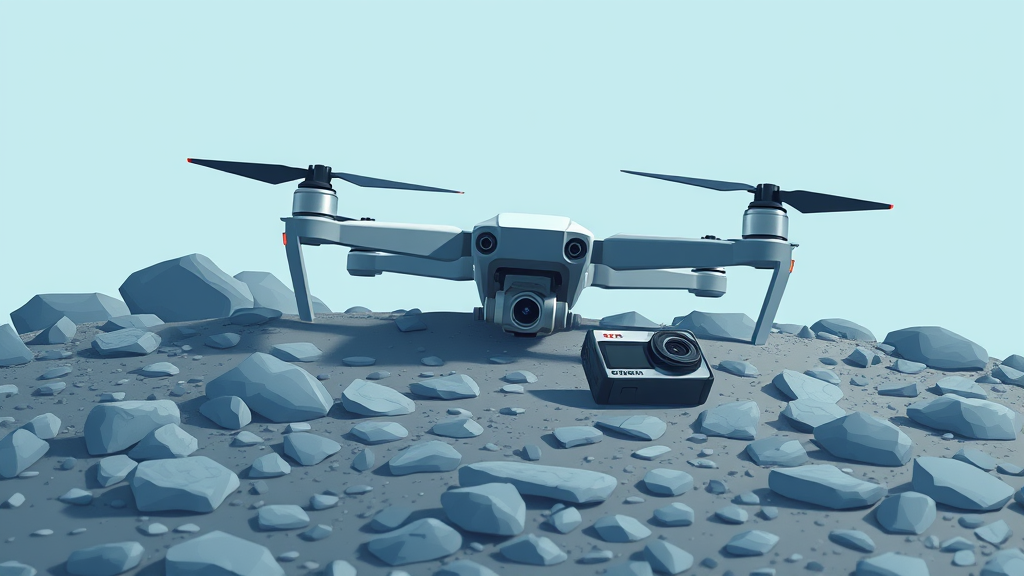

GoPro is one of those brands I've been recommending to family members for years. If you've ever watched a downhill mountain bike run or a skydiving video that made your stomach drop, chances are a GoPro captured it. But every so often a reader asks me: whatever happened to GoPro drones? The company made one, it caused real pain, and then it quietly left the market entirely. MSN recently revisited the whole saga, and it's a story worth retelling, because it's a lesson in what happens when a product runs into trouble before it finds its footing.
The short version: the Karma drone. On paper it made perfect sense. GoPro cameras were already the go-to for aerial footage, so building the drone that carried them seemed like a natural next step. I remember the excitement around it at the time, and I mean everyone assumed the camera company would nail the flying part.
They didn't. Not long after the Karma launched, GoPro had to issue a recall. Some units, the company said, were losing power mid-flight. And if you're wondering what happens when a drone loses power mid-flight, the answer is gravity, and gravity is not covered under warranty. The recall was embarrassing, I won't pretend otherwise, but GoPro addressed the issue and got the Karma back on shelves.
Then came the second problem, and this one was fatal: the competition. DJI's Mavic Pro arrived as a major rival, and by most accounts it simply outclassed the Karma with consumers. When you're the new entrant in a hardware category and a bigger, more experienced rival shows up with a strong product at the same time, the math gets brutal fast.
Eventually, GoPro had seen enough. The company shut down its drone efforts and discontinued the Karma line. It was a painful but honest admission that being great at cameras doesn't automatically make you great at everything adjacent to cameras.
I've watched this pattern play out going all the way back to the 80s and 90s. A company dominates one category, gets confident, and stretches into a neighboring one where the incumbents are simply better at the hard parts. Building a drone means mastering flight controllers, obstacle avoidance, radio links, and battery management, which is a completely different engineering discipline than image sensors and image stabilization. DJI had been grinding away at those problems for years. GoPro was trying to learn on the fly, so to speak, against a company that had already learned.
And to GoPro's credit, the retreat worked. The company refocused on what it was actually good at, tightened the product line, and today it's still the name in action cameras while plenty of once-hot competitors have vanished. I still have an old HERO in a drawer somewhere, and every time I dig it out the footage holds up better than I expect. That's the payoff of sticking to your knitting.
Technology should work for you, and a drone that falls out of the sky works against everybody. GoPro learned that lesson the expensive way, then did the harder, smarter thing by walking away. Sometimes the best product decision a company ever makes is the one where it stops making the product.
Comments (0)
Log in or sign up to join the conversation.
No comments yet. Be the first.