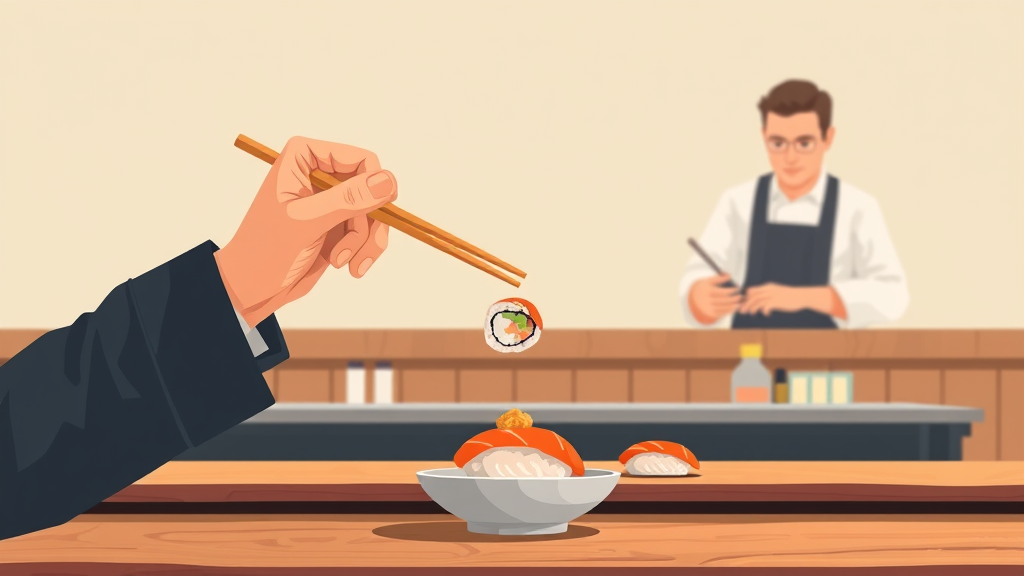

There's a phrase traveling around Japanese travel writing lately: "It's a high-end restaurant, so it's difficult for foreigners." A recent piece on Note tries to unpack where that feeling comes from, and reading it I recognized something I've watched from the other side of the pass, from inside the kitchen, watching the guest walk in terrified.
The anxiety is real, and it usually arrives before the food does. You don't speak the language fluently. The reservation system is a maze. There are rules nobody explained to you, courses with no menu you can read, and a fear that one wrong move, chopsticks held wrong, a shoe removed at the wrong moment, will mark you as the tourist who didn't belong. I have seen that face at counters in three countries. It's always the same face.
What the article gets at, and what I can confirm from years inside kitchens, is that most of that wall is built by the diner, not the restaurant. Yes, some exclusive spots in Kyoto or Tokyo make booking genuinely hard, sometimes through concierge-only channels or regulars-only policies. That part is structural. The rest, the terror of the ritual, is mostly imagination doing what imagination does.
My grandmother served food to people who had never eaten Neapolitan cooking in their lives. She didn't lower her standards for them, not one bit. She just watched their faces and adjusted her explanations, a slower gesture toward the bowl, a demonstration instead of a sentence. Good hospitality is older than any single language. A server at a kaiseki counter in Ginza and a server at a tasting counter in Modena are doing the same job: reading the person in front of them and meeting them there.
And I'll tell you the part the nervous traveler never believes. High-end kitchens, the truly good ones, love a curious foreigner. A guest who crosses the world to eat your food and arrives humble and hungry is a gift, un regalo. The chef notices you. Maybe not with fireworks, but with an extra pour, a slightly longer explanation of the seasonal fish, a small dish that never appeared on the printed course. The people who get the cold shoulder are the ones who treat the room like a trophy cabinet, not the ones who admit they don't know what that herb is.
Practically, the barriers are shrinking fast. Credit cards that once were refused are now accepted. English menus exist where they didn't five years ago. Translation apps have made the language excuse nearly obsolete. What remains is etiquette, and etiquette you can learn in an afternoon: dress with care, eat what's served, don't photograph every plate like a paparazzo, say thank you with your eyes if your mouth can't find the words.
What I'd add to the article's argument is that the fear cuts both ways, and it costs everyone. Restaurants lose curious guests who would have become regulars. Travelers eat safe, forgettable meals a few blocks from somewhere extraordinary. And the beautiful conversation between food cultures, the one where a Tuscan learns what dashi can do and an Osaka chef starts dreaming of pecorino, that conversation needs diners willing to cross the threshold.
So if you've been saving that once-in-a-lifetime reservation because you're afraid you're not refined enough, make it. Walk in hungry, admit what you don't know, and let the kitchen do the rest. Care was never something you needed money or a passport to receive.
Comments (0)
Log in or sign up to join the conversation.
No comments yet. Be the first.