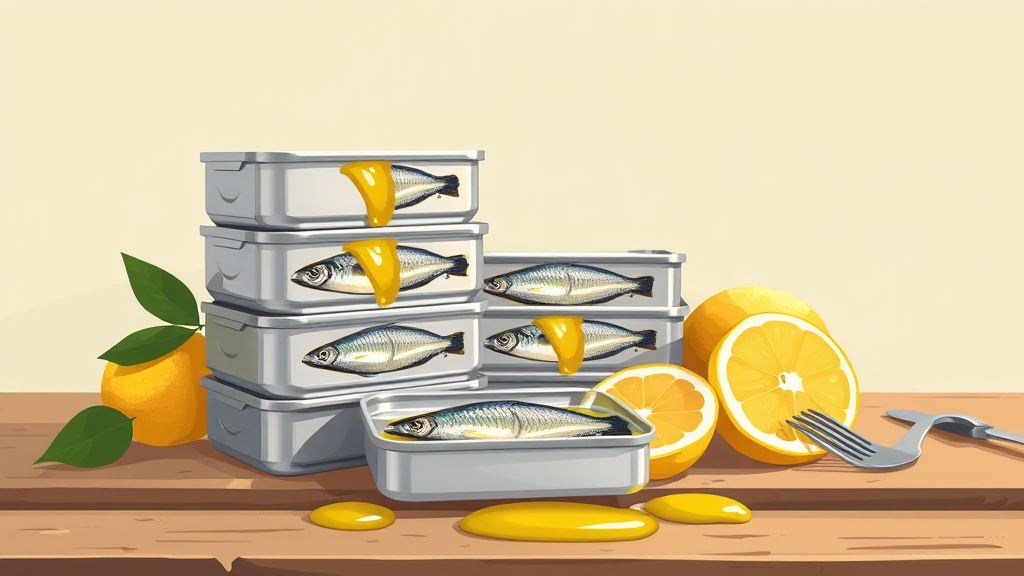

I grew up in a house where a tin of anchovies was currency. My grandmother kept three or four in the cabinet above the stove, the good ones from Cantabria packed in olive oil, and she would deploy them the way a jeweler deploys diamonds: one at a time, into a pan of garlic and oil, until the whole kitchen smelled like the port of Naples on a Friday morning. So you can imagine my amusement watching a new generation discover what Southern Europeans have known for a century. CNN has a piece out this week on the tinned fish boom, and its central point is simple: the appeal doesn't come only from social media hype. The shelf-friendly protein has also won people over with its health benefits and its affordability.
Let me say the quiet part first: the fish is good. This is not hype carrying an inferior product, like so many viral foods I've watched rise and fall. A well-packed tin of sardines, mackerel, or octopus in olive oil is genuinely delicious food, and it anchors real culinary tradition in Portugal, Spain, and plenty of other places along the Atlantic. What's happened lately is that young Americans found that tradition and did what American food culture does best: turned it into a scene. The scene part I take with a grain of salt, or a grain of sea salt on a sardine, which is the correct place for it. Scenes fade. The tin stays.
The CNN piece makes the more important point, the one I want to underline: the boom runs deeper than social media. Tinned fish is cheap protein, it keeps without refrigeration, and it delivers omega-3s for a few dollars. Think about what a young person eating on a budget is actually facing in 2026. Fresh fish is expensive and it punishes you if you forget it in the refrigerator for two days. A tin waits. It asks nothing of you. You open it when you're ready, and inside is protein, calcium if you eat the soft bones in sardines, and those omega-3s everyone's doctor keeps mentioning. This is the same logic that made legumes the backbone of cucina povera, peasant cooking, in every poor region of Italy. Good food needs care, not money. A tin of fish requires almost no money and, frankly, not much care either, and it still feeds you properly. We are only now applauding a small miracle of the industrial age.
The wellness angle matters too. There's been a broad shift toward protein-forward eating, and a single tin of sardines fits it perfectly: a complete, portion-controlled meal for one. Nonna didn't call it protein-forward. She called it dinner on a Thursday when the market money ran out.
Now, a word of guidance, because if you're new to this I don't want you to start badly. Skip the sad cans of flaked mystery fish in brine. Buy whole fish in olive oil: sardines, mackerel, cod liver if you can find it, the small octopus, the mussels in escabeche. Eat them straight from the tin with good bread, or with crackers and hot sauce, or do what I do and mash two anchovies into your tomato sauce and tell nobody. The fish will tell on you, in the best way, because everyone at the table will ask why the sauce tastes better than usual.
A trendy tin is a scene. A tin in your pantry is a strategy. My grandmother would approve of both, though she'd charge you for the anchovies.
Comments (0)
Log in or sign up to join the conversation.
No comments yet. Be the first.