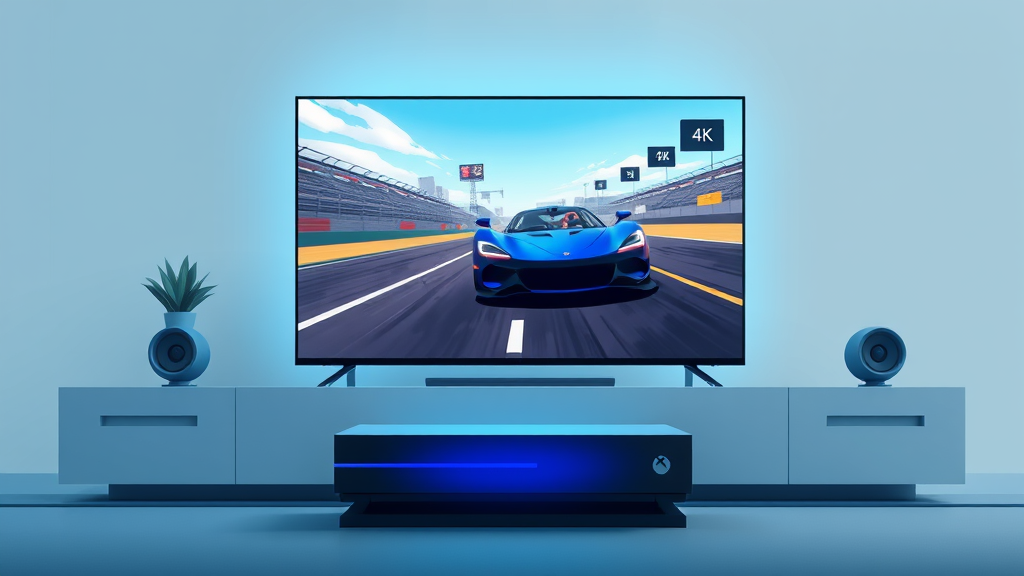

The next Xbox, reportedly codenamed Project Helix, is making the rumor rounds again, and this time the numbers sound like a generational jump instead of a mid-gen refresh. According to Geeky Gadgets, the console would land in November 2027 with a custom AMD GPU built on RDNA 5, and the headline spec is true 4K at 120 frames per second. Not upscaled. Not checkerboarded. Native.
Worth being careful with that claim for a second, because "true 4K at 120" gets thrown around loosely in marketing decks. If the target is real, you're rendering roughly 8.3 million pixels 120 times a second, which is about 2.5 times the pixel throughput of a Series X running at 4K60. RDNA 5 is the piece that makes it plausible. AMD's next-next architecture is the same family rumored for the Steam Deck 2's Gainsboro chip, which I covered a couple of days ago, and if those leaked specs hold up, Microsoft pairing a big discrete-class RDNA 5 GPU with fast GDDR7 would have the raw bandwidth to pull it off in most games, not just patched showcase titles.
The timing also lines up with everything else on Microsoft's roadmap. AMD's RDNA 5 silicon should be shipping in volume by late 2027, and a November launch puts Helix right in the holiday window, seven years after the Series X. That's the longest gap between Xbox console generations ever, and it shows. You can feel the Series X straining on modern titles, which is why stuff like Xbox Cloud Gaming and the ROG Xbox Ally handheld (that ASUS collaboration from the 20th anniversary wave) have been carrying so much of the branding lately.
What's interesting to me, as someone who stares at hardware roadmaps a bit too much, is how much this sounds like a gaming PC wearing a console costume. The rumors point to a semi-custom AMD design, the same playbook Microsoft has run since the original One, but the ambition level reads different. The pitch is apparently to rival a high-end gaming rig, not just beat the PlayStation sitting next to it on the shelf. That's a big swing when a rig that does native 4K120 today costs more than twice what a console can reasonably launch at. Something has to give, and my guess is it's either the price (think $699, not $499) or the definition of "true" quietly shrinking to include reconstruction techniques that look native but aren't.
Then there's the question of what happens to the games themselves. Microsoft has spent years blurring the line between Xbox as hardware and Xbox as a platform, so a 2027 console launches into a world where your library already runs on your phone, your handheld, and your browser. Helix has to justify existing as a box, and raw GPU grunt is the most obvious answer. Exclusive silicon gets people into stores in a way subscription services don't.
Standard rumor caveats apply, obviously. No official specs exist, the November 2027 date could slide a full year the way console timelines always do, and "apparently" is doing a lot of work in that headline. But the shape of it checks out against what AMD is building anyway, and that's usually the sign of a leak with real bones under it.
If this lands at $499 with those specs, I'll eat my mechanical keyboard. If it lands at $699 and actually delivers native 4K120, that's still the most horsepower Microsoft has ever shipped in a living room box, and the Steam Deck 2 vs. console comparison charts in 2027 are going to be very fun to write...
Comments (0)
Log in or sign up to join the conversation.
No comments yet. Be the first.