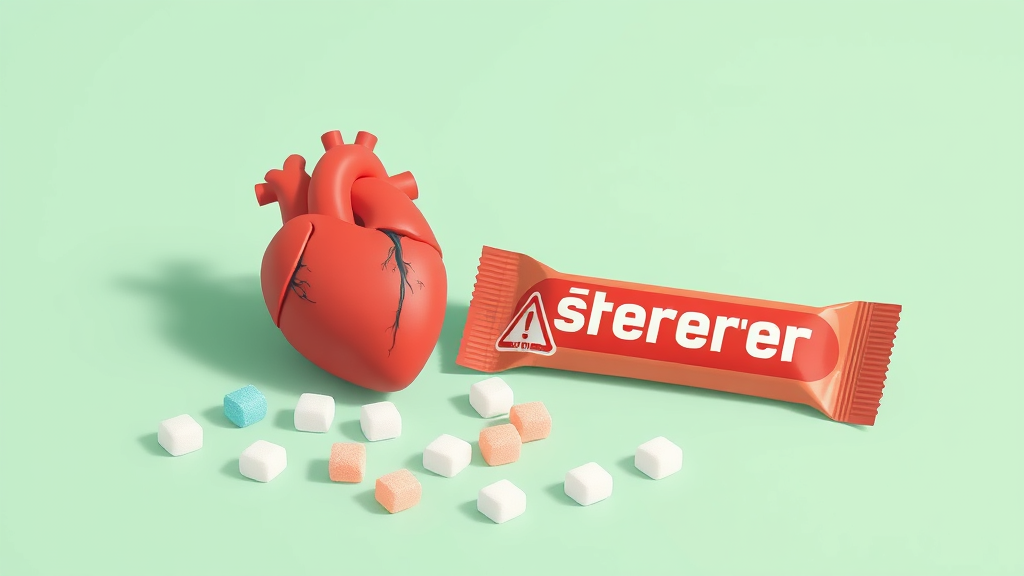

So this one stings a little, because xylitol is everywhere. It's in your sugar-free gum, your mints, your protein bars, your peanut butter, your keto snacks, basically anything labeled "sugar-free" or "no sugar added" has a decent chance of containing it. And a new study suggests it might raise your risk of stroke and heart attack. You can read the full writeup here.
Quick backstory on xylitol for anyone who doesn't spend their free time reading ingredient lists like I do (lucky you). It's a sugar alcohol, and for years it carried a reputation as a safe swap for sugar. That was the common perception, anyway. This new research is part of a growing pile of evidence asking harder questions about that reputation.
A few years back, researchers noticed that people with higher xylitol levels in their blood had worse cardiovascular outcomes. This new research builds on that, and the mechanism is the part that got my attention. Xylitol appears to make platelets, the little cell fragments that clot your blood, more likely to clump together. In lab tests and animal studies, higher xylitol meant stickier platelets. Sticky platelets means clots form more easily. Clots forming where they shouldn't is basically the opening chapter of most heart attacks and strokes.
I called my mom about this one, because platelet aggregation is her department and I wanted to make sure I wasn't mangling the science. Her take: the signal is consistent across multiple study types now, which counts for something, but the evidence still leans heavily on blood levels rather than on tracking how much xylitol people actually ate, and that gap is real. Your blood xylitol after chewing gum is a different animal than your baseline.
And that's the honest limitation here. These studies measure what's in your blood, and people with higher levels tended to have more cardiovascular events. But correlation is doing some heavy lifting, as usual. People eating lots of sugar-free processed foods might differ from people who aren't in a dozen other ways. The researchers did run controlled experiments to test the clotting piece directly though, and that part held up, which makes this more credible than your average observational nutrition study.
Now, the part you actually care about. What do you do with this information?
If you're chewing a couple pieces of xylitol gum a day, I wouldn't panic. The doses in those studies that spiked platelet reactivity were concentrated, not gum-sized. My mom's take was basically the same: a small daily amount is very different from regularly consuming it through multiple products.
The people I'd actually flag for this are the ones, and I say this with love because I was one of you, going hard on sugar-free everything. Keto baked goods, sugar-free candy by the bag, protein bars with xylitol as a main ingredient, "healthy" electrolyte powders. If xylitol shows up three or four times a day in your routine, that's where this research starts to matter for you.
And if you want a practical move that costs nothing, flip the package over once in a while. You might be surprised how often xylitol is sitting near the top of the ingredients in stuff marketed as the healthy option. It's worth paying attention to the whole sugar-alcohol section of the label, not just this one ingredient.
No shame if you've been mainlining the stuff. Like I said, I went through a phase where my kitchen looked like a sugar-free convenience store. The food environment makes it incredibly easy to consume this stuff without ever choosing to. Now you know, and knowing is most of the battle.
Whole fruit still doesn't need a substitute. Never has.
Comments (0)
Log in or sign up to join the conversation.
No comments yet. Be the first.