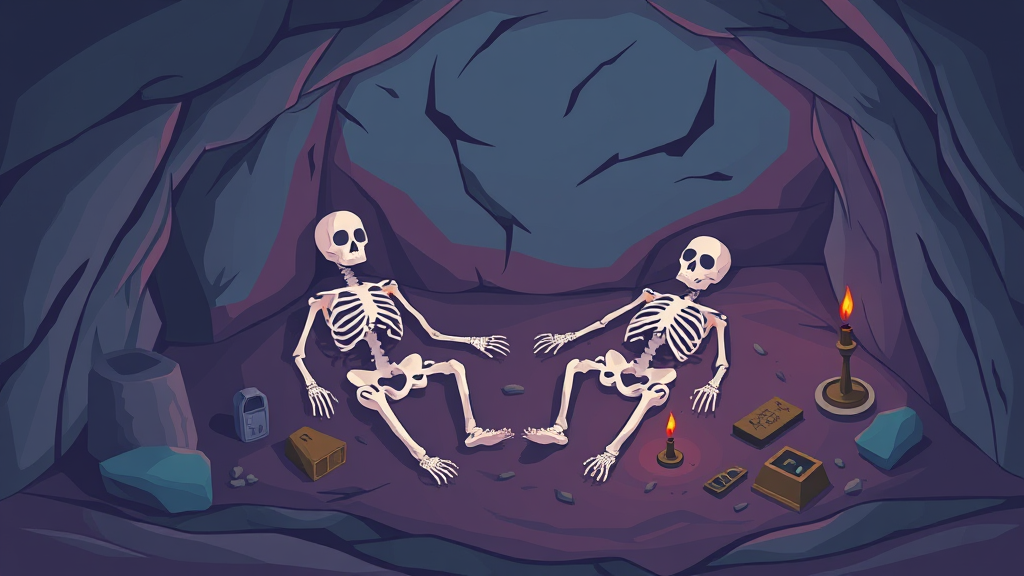

OK so a cave in Israel has been sitting there for 110,000 years keeping the weirdest secret, and archaeologists finally let the rest of us in on it.
The story, reported by MSN, centers on burials that don't fit into a neat little box. We're used to thinking of Neanderthals as the grunting cousins and early humans as the clever ones, but the evidence coming out of this cave suggests both groups were doing something that looks an awful lot like the same rituals. Same cave region, same time period, same careful treatment of their dead.
And I mean really careful. We're talking deliberate burials, bodies positioned with intent, the kind of stuff you don't do if you're just disposing of a body. You do that because death meant something to you. Because the person meant something.
What makes this part of the world so special is that it was basically a crossroads. The Skhul and Qafzeh caves in Israel have famously yielded both Neanderthal and early modern human remains from overlapping periods, which makes the region one of the only places on Earth where we can watch the two groups possibly meeting, possibly living near each other, possibly... sharing ideas? That's the question hanging over all of this. Did they watch each other bury their dead and go, huh, maybe we should do that too?
Because here's what gets me. Burial is not a survival behavior. You don't get more calories from burying someone. You don't get warmer or safer. A burial says something about what a group believes, what it grieves, what it hopes happens next. So if two different human species were doing it in similar ways in the same neighborhood 110,000 years ago, you're not looking at an archaeology finding anymore. You're looking through a window into minds we've been underestimating for a very long time.
Researchers are being careful, obviously. They always are with this stuff, and they should be. "Similar burials" doesn't automatically mean "shared rituals," and the exact dating of who was where and when is still being worked out. But the possibility alone is enough to rearrange your whole mental picture of the deep past.
Think about it. Somewhere around 110,000 years ago, two kinds of people, and I'm using "people" deliberately, were mourning their dead in the same hills. Maybe even learning from each other. Nobody wrote it down. Nobody could. And yet the care still made it into the ground, and the ground held onto it for us.
I've said before that joy is worth documenting with the same energy we give everything else, and I'd put grief in that same category. It might be the most human thing there is, and apparently it's older and more shared than we ever guessed.
The investigation is ongoing, and I will absolutely be following along, because if it turns out Neanderthals and early humans were swapping rituals across the Levant, that changes the story of who we've always been.
Comments (0)
Log in or sign up to join the conversation.
No comments yet. Be the first.