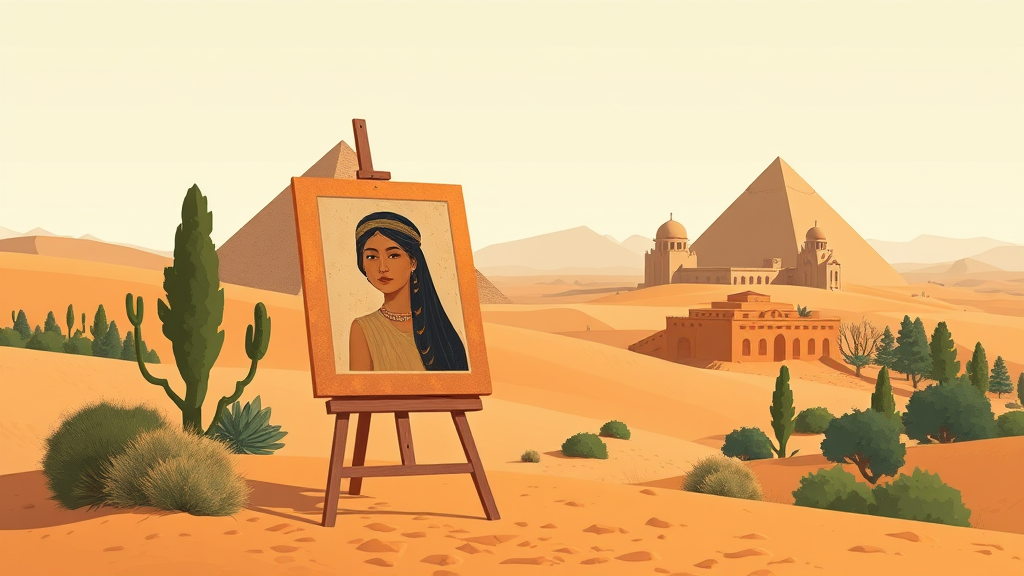

Every good trip starts somewhere small. For travel writer Sophy Roberts, it started with a face, a portrait painted somewhere between the first and third centuries, staring out at her from a wall in a Boston museum. The Fayum portraits, those eerily lifelike faces painted on wooden panels for Egyptian mummies, have a way of doing that to people. You look at one and realize the person looking back predates most of what you learned in school by a couple thousand years, and they had better eyeliner than you do.
Roberts followed that face all the way to Egypt, as she recounts in her piece for the Financial Times, and the trip she built around it is not the Nile cruise everyone else does. She went for the temples, the monasteries, and the desert landscapes, the kind of empty horizons that make you understand why humans have been obsessed with this stretch of earth since before we had a word for history.
I say this as someone who has stood in canyons that made me feel geological rather than ancient-old: the scale of time in Egypt rearranges your brain a little. In Colorado I can hike past a rock formation and think, wow, seventy million years. In Egypt you're looking at buildings people made, on purpose, with their hands, five thousand years ago. Structures that still stand. Columns you can walk between. Paint that still holds color in places, because the desert is basically nature's archival storage.
The monasteries are the part I'd want to copy from any Egypt itinerary. The Coptic monasteries of the Egyptian desert sit in landscapes so stripped down they look like the surface of another planet. Monks went out there deliberately, chasing silence, in the third and fourth centuries. There's a version of that impulse I recognize from backpacking, the desire to get far enough out that your own head finally goes quiet. They just skipped the sleeping bag and committed for life.
The temples are the headliners, obviously. Egypt's big names, places like Karnak and Luxor, draw the crowds for a reason, and Abu Simbel is one I'll admit a soft spot for because the whole thing was cut apart and moved uphill in the 1960s to save it from the rising water behind the Aswan High Dam. Engineers sawed a mountain into blocks and reassembled it. That's an outdoor project of a scale that makes my most ambitious camp setup look like a pillow fort.
Practical notes if this piece puts Egypt on your list, because it should. Go in the cooler months, November through February-ish; summer heat in Upper Egypt is genuinely dangerous, not just uncomfortable, and temple sites offer almost zero shade. Carry more water than feels reasonable. Go early, at opening, before the tour buses arrive, because standing nearly alone in a colonnade that old is a completely different experience than shuffling through it in a crowd. And hire a good local guide for at least a day or two. The hieroglyphs become stories instead of decoration, and the stories are the whole point.
What I keep thinking about is that portrait. Roberts saw a painted face under glass in Massachusetts and it pulled her across an ocean and into the desert. That's the best reason to travel I know of. No checklist, no algorithm, just one image that wouldn't let go of you.
When was the last time something you saw in a museum sent you somewhere? If you can name it, start planning. The desert will still be there, patient as it's ever been.
Comments (0)
Log in or sign up to join the conversation.
No comments yet. Be the first.