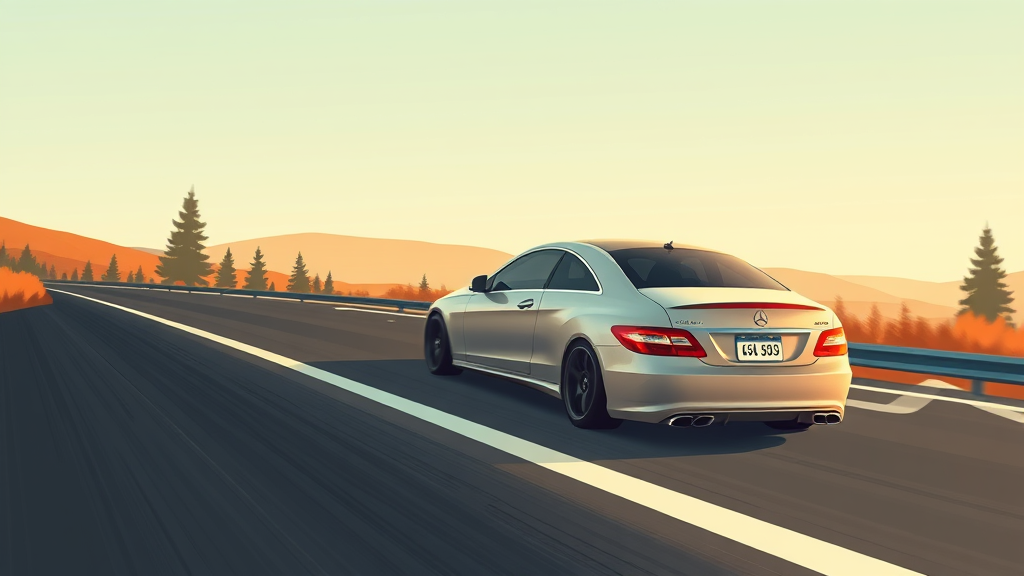

Some stories write their own punchline. This one comes from MSN's writeup of a stolen Mercedes that hit 100 mph with a passenger still inside, and the thing that got me was how it ended. Not a remote engine shutdown. Not a tracking service, not some concierge safety team in a call center three time zones away. An empty fuel tank.
The car ran out of gas. That's it. That was the anti-theft system that worked.
Modern vehicles, especially a Mercedes, are rolling computers. Telematics, GPS, apps that let you lock the doors from a different state, subscription services that supposedly locate your car and coordinate with police to recover it. All of that, and the countdown that ended the chase was measured in gallons.
I spend a lot of time thinking about what gear actually does versus what it promises, and this lands right in that pocket. I've tested enough "waterproof" jackets and "four-season" tents to know the spec sheet and the ridge trail tell different stories. Cars are the same, apparently. The brochure lists a whole suite of recovery features; the recovery was handled by physics running out of fuel to burn.
The passenger angle is what makes this more than a weird news blip. Somebody was inside a vehicle screaming down the road at triple digits, and the outcome hinged on the thief's fuel management. Not a plan. Luck. When your safety depends on the person endangering you being bad at logistics, that's a thin margin.
It's worth knowing what your car can actually do if it disappears from a trailhead lot, because that's exactly where vehicles get lifted. You park at dawn, you're six miles up a ridge by noon, and your keys are either in a hide-a-key under the bumper or riding in your pack with you. (Ridge with me. Always. I learned that one the hard way after a close call at a crowded lot near Boulder years ago, a story involving a very generous stranger and a very long walk.)
So here's the practical part, and it's boring on purpose. First, know whether your car's tracking feature is actually active, because a lot of manufacturers put it behind a subscription that lapses quietly. Second, test the app before you need it. Third, and I say this as someone who has watched a lot of fancy gear fail in the field, don't outsource your safety to any single system. The fuel gauge stopped this car, but that wasn't a security feature. It was a coincidence wearing a security feature's jacket.
If a thief takes your vehicle with you nowhere near it, layers are what matter. A steering wheel lock looks dorky and works, because thieves shop for easy. A tracker hidden independently of the car's own system gives you a second rope when the first one frays. And knowing your VIN, keeping recent photos of the vehicle, speeds up everything that comes after.
The good news is the passenger got out of it, the car stopped, and the stopping mechanism just happened to be the oldest one in motoring. Next time you're at a quarter tank on some two-lane in the middle of nowhere, remember the gauge is doing more work than any of us give it credit for.
Comments (0)
Log in or sign up to join the conversation.
No comments yet. Be the first.