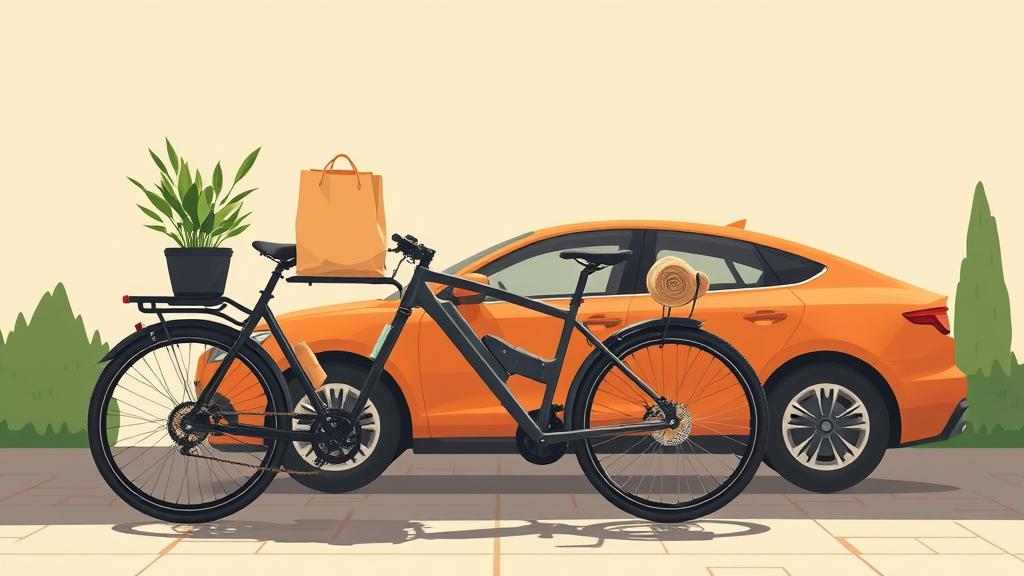

Can a cargo e-bike actually replace a car? One writer answered that the only way that counts, by living with a Tern HSD3 for an entire summer of errands, hauls, and daily life. You can read the full piece here, and it's worth your time if you've ever stared at your car keys and wondered how many of those trips really needed four wheels and a trunk.
The answer, roughly, is fewer than you think. But not zero, and the gap between those two is where it gets interesting.
The HSD sits in that middle ground of cargo bikes, smaller than the long-tail tanks but with enough rack capacity and passenger rating to carry a kid, a week of groceries, or a suspiciously large bag of dog food. The pitch is that it handles like a normal bike while hauling like a tiny pickup, and based on the summer-long test, that pitch mostly holds. Hills that would have you walking a regular bike loaded with thirty pounds of groceries just... aren't a thing with the assist. You arrive sweaty from the sun, not from the effort.
I've done the car-replacement math myself in a different key. I once tried to make my old hatchback do the job of a truck for a camping trip, strapping a cooler to the roof and a tent to the hatch, and I spent the whole drive listening to things shift. The cargo e-bike version of that mistake is buying a bike too small for your actual life, then stretching bungee cords across a rack that was never rated for what you're doing. The HSD's whole design brief is avoiding exactly that, and the long-term test is where you find out if it delivers.
What a summer of testing reveals that a weekend demo never will: how the battery holds up when you forget to charge it, whether the kickstand stays solid when the bike is loaded heavy, how it handles rain, and whether you actually reach for it in October or whether it quietly becomes a very expensive garage ornament. Any bike is fun in July. The question is whether it's useful in the rain, in a hurry, with a full load.
The practical honest answer from this test seems to be that the HSD replaces most car trips, not all of them. Grocery runs, school pickups, hardware store stops, the daily stuff that makes up the bulk of your driving, that's where an e-cargo bike genuinely wins. It's faster than you'd expect in town, parking is a non-issue, and you get to roll past every gas pump with the specific smugness of someone towing nothing but their own lunch. But the big hauls, the long highway distances, the IKEA runs, those still belong to a car.
Most households don't need to replace the car entirely, though. Replacing half the car trips still cuts your fuel bill noticeably and puts you outside more, which, if you've read anything I've written, you know I consider the actual point. The outdoors belong to everybody, and a bike that makes everyday movement something you look forward to is a pretty good gateway drug to that.
Would I run out and buy one? If my errand radius was under five miles and I had a flat-ish route home, absolutely. If you live at the top of a 12 percent grade with a trailer-full of gear every weekend, maybe test-ride first. But that's true of every bike, and it's why real summer-long reviews like this one matter more than any spec sheet.
Now somebody just needs to bolt a bike rack to one and take it camping.
Comments (0)
Log in or sign up to join the conversation.
No comments yet. Be the first.