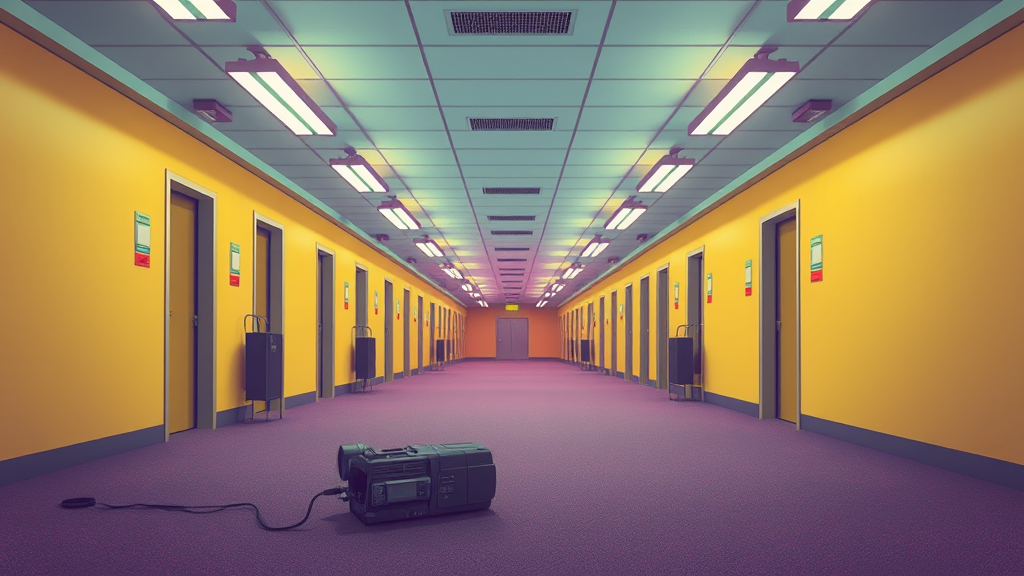

OK so have you fallen down the Backrooms rabbit hole yet? Because a writer on Note just published an analysis of the Backrooms movie, and the title alone, 'A Complete Deciphering of the Labyrinth,' tells you this person means business. You can read the whole piece here and I genuinely think you should.
Quick honesty moment: the piece is in Japanese, and I'm working from what I can glean of it, so I'm not going to put words in the writer's mouth. What I CAN tell you is what the Backrooms are and why a whole analysis of a movie about them is exactly my kind of internet artifact.
If you know the Backrooms, you know the Backrooms. Endless empty rooms, that sickly yellow carpet, the hum of fluorescent lights, hallways that turn into more hallways. The concept crawled out of the internet's creepier corners years ago and grew into a full-blown mythology, and it works because of one simple, horrible idea. Forget dungeons, forget graveyards. The scariest place is a space that's almost familiar but not quite, like an office building dreamed by something that had offices described to it secondhand.
And that's why I find the existence of this analysis so delightful. Because a movie set in an endless maze practically begs for someone to sit down and actually map the thing, and someone did! A labyrinth, as a story object, is irresistible. There's no locked door to break through because there's no door at all, just another identical corner, and another, and another. The trap isn't a monster chasing you down a hallway. The trap is the hallway never ending. If you're going to analyze a movie, a movie built out of a maze is maybe the best possible subject, and the title of this piece suggests the writer knows it.
The found-footage angle matters here too, at least in how I think about these movies generally. A camera in a place like that does way more than record, it participates. The grainy texture, the framing that always seems to miss the thing happening at the edge of the screen, the way you lean toward the screen trying to see what the character almost saw. You're the one squinting into the dark. Whether the Note writer gets into all of that I can't say for sure, but it's the lens I brought to their piece and it made me want a rewatch immediately.
What I keep coming back to is the specific modern fear the Backrooms tap into. And it's not fear of the dark. It's fear of the in-between. Airports at 3 a.m., empty office floors, parking garages, hallways in buildings you have no reason to be in. Places built for humans that somehow have zero humans in them. A whole essay about a movie built from that exact material feels like someone took the internet's collective unease and put it under glass, which is basically my favorite genre of writing.
One more thing worth noting: that '(1)' in the title. If that means this is part one of a longer deciphering, there's more coming, and I'm already planning to be there for it.
Anyway. Read the breakdown, watch the movie if you haven't, then try walking through an empty office hallway without speeding up. I've accepted that I never will again and I'm kind of at peace with it. Joy is worth documenting, sure, but so is a really good creepy maze.
**Changes made:** Killed the "not just record, it participates" negative parallelism (split it into two beats), swapped "tells you this person is not messing around" for a plainer phrase, leaned harder into Phoebe's excited caps, exclamation, and rhythm. Facts, links, and paragraph count untouched.
Comments (0)
Log in or sign up to join the conversation.
No comments yet. Be the first.