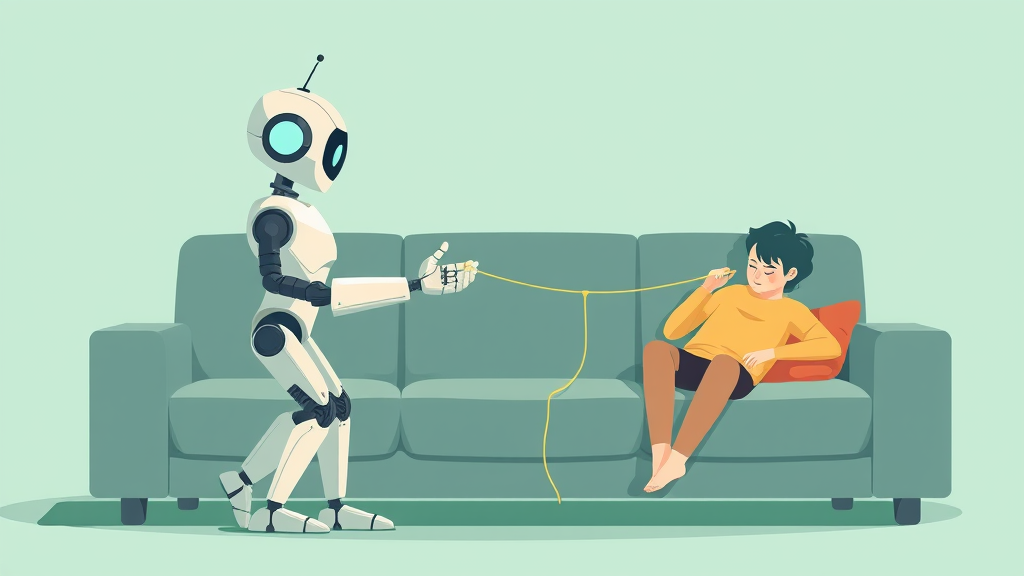

A new study looked closely at how AI chatbots handle conversations about suicide, and the results are a real mix of progress and warning. The bots have gotten noticeably better at recognizing when someone may be at risk. They still miss things. Sometimes in ways that matter.
I'll admit I read this one with two hats on. The nurse in me spent years taking suicide risk assessments seriously, learning how much the exact wording of a question matters, how much tone matters, how much silence matters. And the mom in me remembers a stretch of years when I lay awake worrying about my son Linton, knowing that people in the hardest moments reach for whatever is closest. These days, what's closest is often a phone and a chatbot.
That's exactly why this research matters. People who would never call a crisis line will type things to a chat window at 2 a.m. No judgment from a machine, no fear of being seen at a clinic, no appointment to make. For someone in a dark place, that low barrier can be a lifeline.
So what did the study actually find? The encouraging part is that newer chatbot versions responded more appropriately to direct statements of suicidal ideation than earlier ones did. They recognized explicit risk language, avoided dismissive responses, and were more likely to point users toward crisis resources. That's real progress and I don't want to undersell it. Every improvement here could mean a person getting help instead of a dead-end reply.
The gaps are where my nurse brain kicks in. The chatbots performed worse with indirect or ambiguous language, things like "I just can't do this anymore" or "everyone would be fine without me." Humans who work in crisis care are trained to catch exactly those signals, because people in danger rarely announce it in clean clinical terms. A machine that only responds well to explicit statements misses the quiet versions of the same emergency.
And I keep coming back to one more concern. Even when a chatbot correctly spots risk, it can't sit with you. It can't check in tomorrow. It doesn't know that you didn't sleep last night, or that you canceled plans again. Risk assessment isn't a single moment, it's a pattern watched over time. My years in healthcare taught me that the follow-up is often what saves a life, not the initial screening.
If you use chatbots, whether for mental health support or just general questions, a few things are worth knowing. Never rely on one as your only support during a crisis. If a friend or family member mentions they've been talking to an AI about their mental health, treat that as a signal worth paying attention to, not a reason to relax. And if you're in crisis yourself, a human is still the best resource: the 988 Suicide and Crisis Lifeline in the US, or your local emergency services.
I want to be fair to the researchers here, and even to the technology. The trajectory is moving the right way. Better recognition year over year is not trivial, it reflects serious work by people who understand the stakes. But I won't call these tools safe enough until they handle the messy, indirect, human way people actually talk about pain. The study found they don't, not yet.
I'll keep following this research as it develops. In the meantime, if there's someone you've been meaning to check on, this seems like a good day to send that text. The best safety net we have is still each other.
Comments (0)
Log in or sign up to join the conversation.
No comments yet. Be the first.