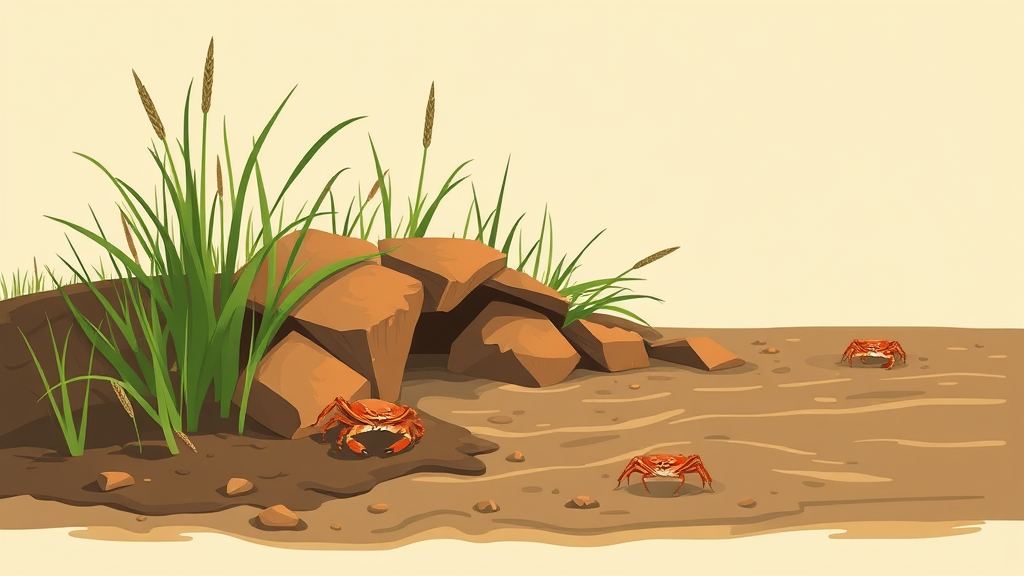

Saltmarsh cordgrass hissing in a light wind. Fiddler crabs waving their one ridiculous oversized claw at anything that moves. That sulfur smell off the pluff mud that seems gross for the first five minutes and then becomes the smell of a good day. That's an Alabama salt marsh in August, and there's less of it every year.
A recent piece on the Alabama coast walks through what we keep losing as these marshes erode, and the framing stuck with me: a thousand cuts. There's no single villain and no dramatic collapse date to point at. Just bulkheads going in, channels getting dredged, storms stacking hits on top of each other, water creeping a little higher every year, until a marsh that fed a bay for centuries turns into a mudflat and then open water.
I found out what that mud can do a few summers back, when I tried to save ten minutes by cutting across a marsh flat near Bon Secour at low tide. I sank to mid-thigh in maybe four steps and lost a sandal getting out. The marsh kept the sandal. I now give salt marsh the same respect I give bear country, and I buy sandals I can afford to lose.
The thing is, no single stretch of marsh loss looks like an emergency on its own, which is exactly why the total keeps growing. And the reason shrimpers, crabbers and charter captains care so much is simple: marsh is nursery habitat. Juvenile brown shrimp, blue crabs, flounder speckled trout and redfish all spend the dangerous early part of their lives tucked into that grass, where bigger fish can't hunt them and the constantly rotting vegetation loads the water with food. The foundation of the whole system is smooth cordgrass, Spartina alterniflora. By most estimates the majority of commercially landed Gulf species depend on estuaries like this for some stage of their life. Your shrimp po-boy started right here.
The marsh works other jobs while it's at it. That grass flattens storm surge before it reaches somebody's living room. It filters the runoff coming down from the rest of the watershed. Herons, egrets, clapper rails and the occasional American oystercatcher work the edges at low tide. The water's edge belongs to everybody in the loosest, most literal sense, because everybody's dinner comes out of it.
The repair work is real, and some of it is working. Living shorelines built from bagged oyster shell and reef balls are going in around Mobile Bay, volunteers plant cordgrass by hand every spring, and a fair chunk of it has been funded with oil spill settlement money, which is a decent plot twist, I'll give it that. The Dauphin Island Sea Lab keeps producing the research that shows where those efforts pay off most. But it's slow going. A marsh built in one season takes a decade or more to function like the one it replaced, if it survives at all.
So when's the last time you actually stood at the edge of one of these places? Not driven past it on the way to the beach. Stood there. There are boardwalks at the Weeks Bay reserve and around Dauphin Island that put you ten feet into the grass with zero mud risk and excellent odds on a heron. Go this fall once the heat breaks. Bring binoculars and bug spray, and expect the bugs anyway. The marsh will be busy either way, growing seafood and holding the coast together whether anyone shows up to notice or not.
Comments (0)
Log in or sign up to join the conversation.
No comments yet. Be the first.