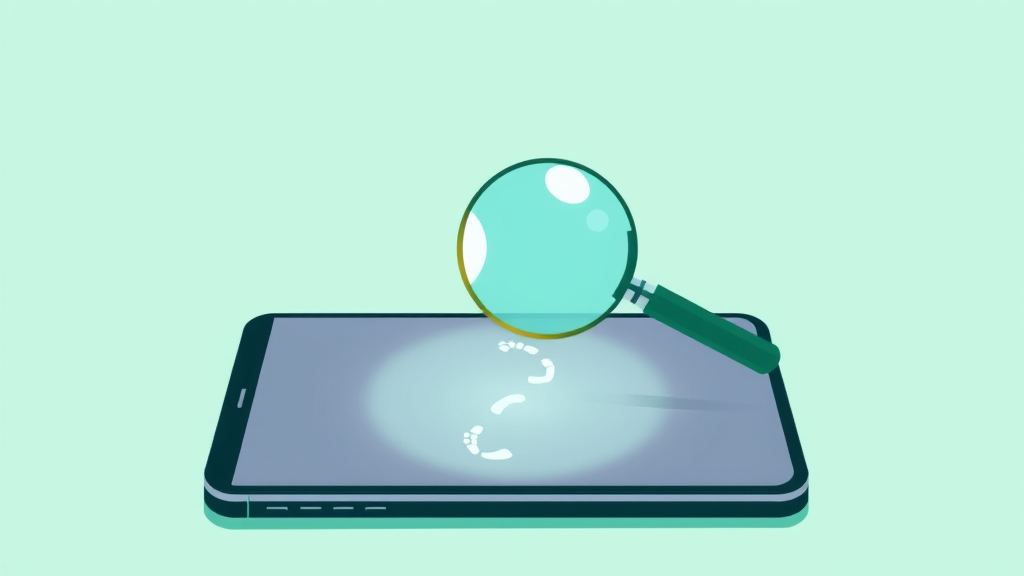

A recent piece in Psychology Today asks a question I think matters more than the noise around it suggests: what happens when algorithms try to read our mental health from the digital breadcrumbs we leave behind? The article's framing is privacy and boundaries, and I kept turning it over after I closed the tab.
Here's my own way of putting the worry, and I want to be clear this framing is mine, not the article's. Software noticing a downward drift before you've named it for yourself feels like a different category of thing than a quiz at your doctor's office. Whether that's promise or threat depends almost entirely on who's watching and why.
The underlying field is real. Researchers call it digital phenotyping, and the general idea is that everyday behavioral traces, things like how you use your phone, can be fed into algorithms that estimate how you're doing. The Psychology Today piece doesn't enumerate specific signals, so I won't put words in its mouth, but the field as a whole looks at patterns of behavior over time rather than what you tell anyone directly. My own illustrative example, purely hypothetical: imagine someone who usually texts a wide circle of friends and then goes quiet for days. That kind of shift carries information, whether the person meant to send it or not.
Let me be a nurse about this for a second. My son Linton went through a very rough stretch in his twenties, and twenty years in healthcare taught me something alongside that experience: the people struggling most are often the least able to reach out. That's my family's story and my professional opinion, not something from the article. But it's why I think early intervention matters, and why a tool that could flag trouble early, in a care setting, with consent, doesn't strike me as a gimmick.
The boundaries question is where I slow down. Did you agree to let an app make an inference about your state of mind? Who sees it? I want to frame the downstream worries as questions rather than established outcomes. Could an inference like that someday follow someone into an insurance file or a hiring process? I don't know that it has, and I won't claim it has. A depression screening at your doctor's office sits inside a protected clinical relationship. It's fair to ask whether a score generated outside medicine sits inside anything comparable, and the source article's concern about boundaries suggests its author is asking the same thing.
And there's a subtler problem, again my own thinking here. An algorithm that flags a change in behavior doesn't know if someone just started night shifts, or had a baby, or is quietly rebuilding after a loss. Context is most of diagnosis. That was true when I worked hospital floors and it's still true now, no matter how good the model gets.
Where I land is this. Tools like these could genuinely help in care settings where people know they're being monitored and clinicians interpret the signals with human judgment. Outside of that, mental health inferred from breadcrumbs without your knowing participation is a line we shouldn't casually cross.
One question worth sitting with: if an app told you it thought you were struggling, would you want to know, or would you feel exposed? Your answer probably says a lot about where this technology should be allowed to go.
Comments (0)
Log in or sign up to join the conversation.
No comments yet. Be the first.