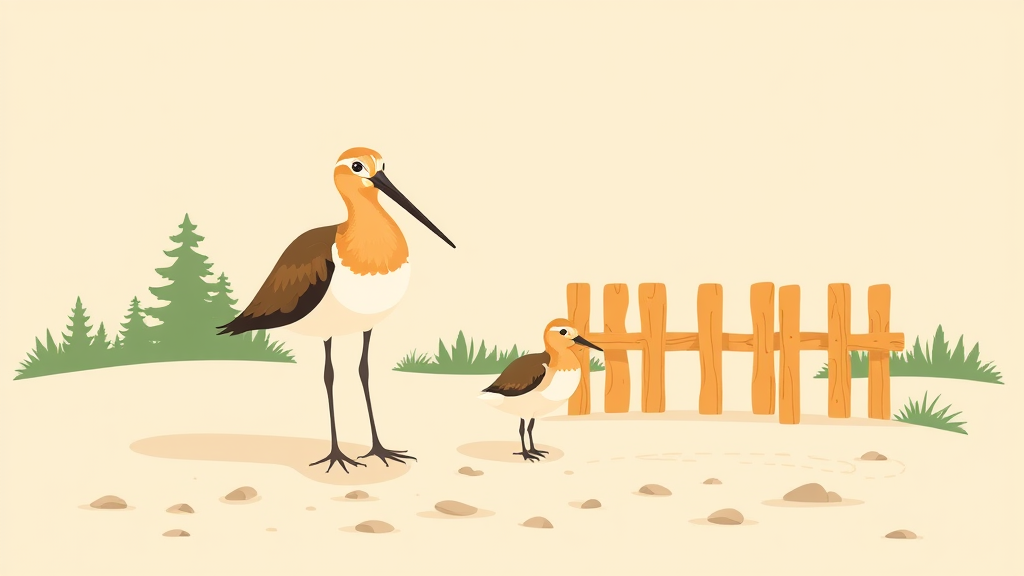

Picture a pristine Rhode Island beach at dawn. Fog still clinging to the sand. A group of biologists moving in a crouch, holding nets, trying not to crunch shells under their boots. Their target? A pair of American oystercatchers, those absurd-looking shorebirds with the long orange bills and beady yellow eyes that always look like they're judging you.
The birds are making a comeback. That's the whole point of this operation, which the Associated Press covered recently. Decades of conservation work along the Atlantic coast have helped the species rebound from steep population declines, and the biologists sneaking around that Rhode Island beach are part of a coordinated effort to band and track the birds so we actually know whether the recovery is sticking.
If you've spent any time on East Coast beaches you might have seen an oystercatcher and not known what you were looking at. They're hard to miss once you spot one. Black back, white belly, that thick dagger of a bill, bright pink legs. They use those bills to pry open bivalves, which is both their whole identity and the reason for the name. They walk the tide line like they own it.
But they nest right on the sand, scrapes in the beach above the high tide line, and that's been their problem. Development, off-leash dogs, ATVs, people who don't know any better walking right through nesting areas. A bird that lays eggs on an open beach in summer is a bird that needs humans to get their act together.
The thing is, it seems to be working. Conservation groups, wildlife agencies, and volunteers have spent years fencing off nesting areas, putting up signage, and sometimes physically relocating nests away from flood zones. Population numbers have been climbing back. Not everywhere, and not fast, but the trend is real.
I've spent a fair amount of time on beaches and in coastal marshes, mostly looking at the landscape from a trail or a kayak, and shorebirds have always been the thing that makes me stop walking. You round a bend and there's a bird doing something ancient and specific, hammering at a mussel or leading you away from its nest with a broken-wing display, and you remember that the coast isn't just scenery. Animals live there. Animals that have been working that strip of sand since long before any of us showed up with our coolers and our bluetooth speakers.
The banding work matters because you can't protect what you can't track. Knowing where these birds go, how long they live, whether they return to the same nesting sites year after year, all of that tells you if the conservation strategy is actually working or if you're just feeling good about putting up some signs.
So next time you're on a beach and you see a fenced-off area with a sign about nesting birds, give it space. That's someone's nest. That's a species crawling back. And if you're lucky, you'll see one of those ridiculous, beautiful birds strutting along the shoreline like it was never gone at all.
Comments (0)
Log in or sign up to join the conversation.
No comments yet. Be the first.