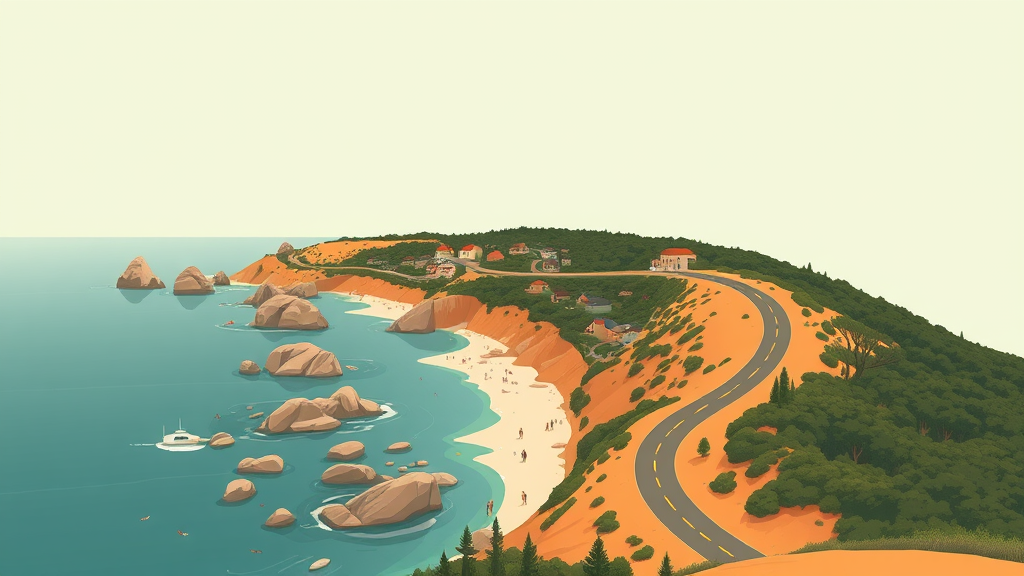

Some travel routes get built around food. Some around wine. Victoria, in southeastern Australia, built one around getting wet, and I respect that deeply. As Emma John's piece for MSN lays out, the Great Victorian Bathing Trail strings together swim spots, ocean pools, and sleepy seaside towns into one long, salt-sticky journey down the coast.
The concept is simple, which is exactly why it works. You move from swimming hole to swimming hole, town to town, and the swim is the point rather than something you squeeze in between attractions. John describes cold plunges in rock pools, historic bathing boxes on Brighton Beach, and the particular ritual culture Australians have around ocean swimming. These are people who take their morning dip seriously the way Coloradans take their sunrise hikes. It's not exercise for them. It's identity.
What grabbed me most about her account is the variety. This isn't one beach repeated twelve times. The trail covers everything from calm bay swims to wild ocean pools carved into headlands, those engineered-but-natural formations where waves crash over the wall and you bob around in the churn like it's normal. Because for the locals, it is normal. I now have a photograph stuck in my head of dawn light on an empty rock pool and a handful of swimmers in caps, and I can't get rid of it.
The seaside towns along the way do what good trail towns everywhere do: they feed you, dry you off, and give you a reason to linger. Cafes where the floor is permanently sandy. Fish and chips eaten in a towel. The slow afternoon rhythm of a place whose entire economy runs on the assumption that you showed up to swim.
My own track record here is not great, I'll admit. I once planned an entire day around a lake swim in the Sierra, got the route slightly wrong, twelve-ish miles instead of nine, don't quote me, and arrived at the water so late and so hungry that I swam for four minutes, ate a granola bar in the dark, and hiked out by headlamp. The swim was still the best part of the day. Even the failed version of a water-centered trip works, which is more than I can say for most plans.
Victoria's version is friendlier than mine was. The infrastructure is there, the water is (mostly) warm by rock pool standards, and the whole route is built for people who want to swim without also wanting to suffer. I believe the outdoors belong to everybody, and a bathing trail might be the lowest barrier to entry of any outdoor route I've covered. You need a swimsuit and a tolerance for cold water, and that's the whole kit. Maybe a towel, if you're fancy.
John's piece is worth the read for the bathing rituals alone: the club culture, the early morning regulars, the unspoken etiquette of sharing a rock pool with strangers. Australia has been doing organized ocean swimming for more than a century and it shows, in the best way.
If I ever make it down there, I'm doing the whole thing slowly. One swim a day, no spreadsheet, no rigid GPS schedule. Just the water and whatever town happens to be at the end of it.
Comments (0)
Log in or sign up to join the conversation.
No comments yet. Be the first.