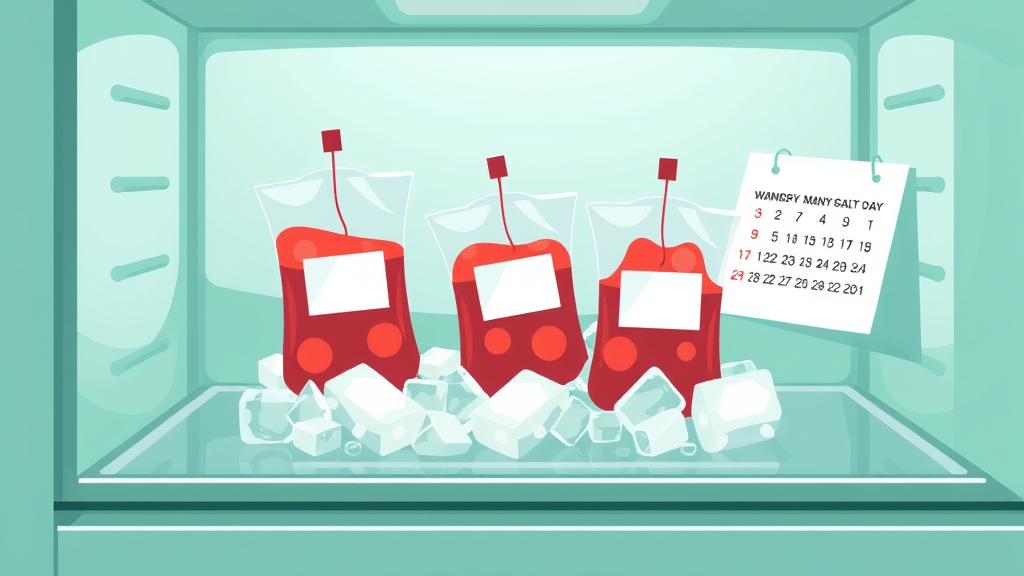

If you've never thought much about platelets, you're in good company. Most people haven't. But in twenty years of nursing I saw firsthand how much hospitals depend on them, those tiny cell fragments that clump together to stop bleeding after surgery, trauma, or chemotherapy. I also saw the constant quiet scramble to keep them in stock, because platelets have a painfully short shelf life.
That's why a new study reported by Reuters caught my attention. Researchers found that platelets can be chilled and stored for up to two weeks, rather than the few days that current standards allow. For anyone who has worked near a blood bank, this is genuinely big news.
The problem itself is a strange one, so let me walk you through it. Platelets are normally stored at room temperature, and even then they only last about five to seven days. Why not just refrigerate them, like we do with red blood cells? Because for decades, doctors believed that chilling platelets caused the liver to clear them out of the bloodstream almost immediately after transfusion. Cold platelets, the thinking went, were functionally useless once they hit a patient's body. So hospitals have been stuck storing a perishable product at room temperature, which also happens to be a friendly environment for bacteria. That short window plus infection risk means a lot of platelet units get discarded, wasted, every single day.
The new research challenges that old assumption. The study found that chilled platelets remain viable and functional for up to two weeks, surviving in circulation long enough to do their job. If that holds up, it could stretch supply windows from days to weeks, cut waste dramatically, and make platelets available in places that currently can't reliably get them at all, smaller hospitals, rural clinics, disaster zones.
I want to be careful here, the way I always ask you to be careful with headlines. This is one study, and changing transfusion medicine standards is a slow, deliberate process for good reason. We're talking about something that goes into people's veins. Regulators will want to see the results repeated, expanded, and confirmed in larger patient groups before chilled platelets become routine. That's not bureaucracy being stubborn, that's the safety net working as designed.
But the direction is encouraging. Transfusion medicine doesn't make headlines often, and when it does, it's usually because of a shortage. This is the opposite kind of story, a supply problem possibly getting meaningfully easier.
My son Linton needed transfusion support during a rough hospital stretch in his twenties, and I remember watching the bag hang there thinking about how many people had to coordinate, donate, test, transport, all within a window of days. It's logistics that most patients never see and never have to think about. That's the miracle of it, really. And if this research pans out, that invisible system gets a little more breathing room.
If you've never donated platelets, this seems like a good week to mention it. A single platelet donation takes longer than whole blood, but it helps cancer patients, surgical patients, and trauma victims, and the supply always runs tight in late summer. Two weeks of shelf life doesn't matter much if the donations aren't there to fill the fridge in the first place.
Comments (0)
Log in or sign up to join the conversation.
No comments yet. Be the first.