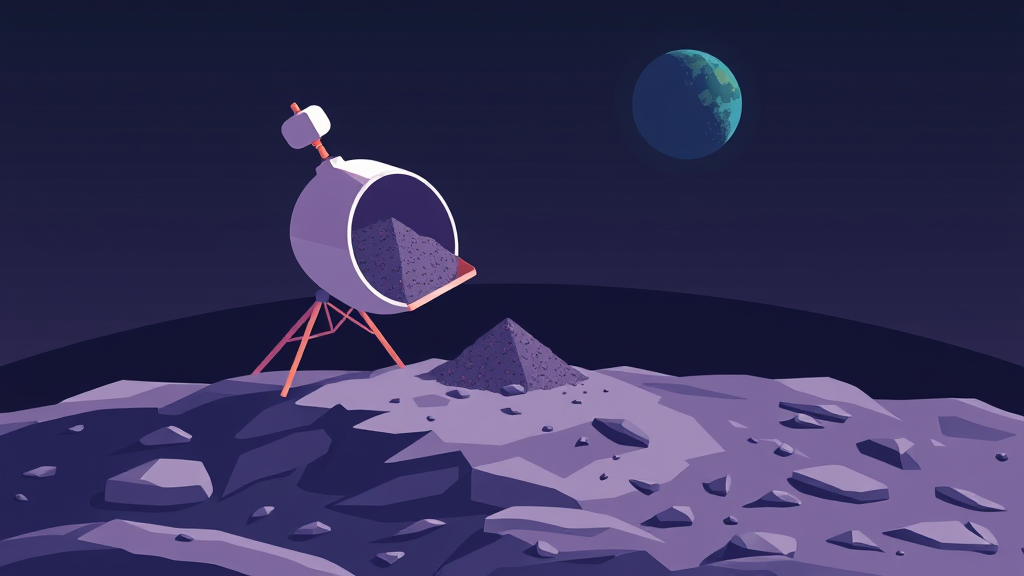

OK so you know how I feel about scientists being baffled. It's my favorite genre of news. And this week the genre delivered again, because China's Chang'e missions, the ones that scooped up actual Moon rocks and flew them home, have handed researchers samples with stuff in them that people are still arguing about. As MSN reports, the discoveries keep raising questions nobody had on their lunar bingo card.
Quick recap for anyone who hasn't been following: Chang'e 5 brought back about 1,700 grams of lunar soil in 2020, and Chang'e 6 followed in 2024 with samples from the far side of the Moon, which had literally never been sampled by anyone, ever, in the entire history of spaceflight. First far-side material in human hands. That alone is enormous.
And then everyone started looking at the stuff under microscopes and going "huh."
Researchers studying the Chang'e 5 samples have described glassy beads, weird mineral grains, and tiny impact fragments that don't quite match what the Apollo missions brought home decades ago. Part of that makes sense, different landing site, different terrain, different age of rock. But some of the material properties and chemical signatures are proving genuinely tricky to reconcile with existing models of how the lunar surface formed and got battered over billions of years. When your model says one thing and the Moon says another, the Moon wins, and the scientists get to spend the next few years figuring out why.
The far-side samples add a whole other layer. The Moon's two halves are surprisingly different, the near side is dark and lava-covered, the far side is pale and cratered, and nobody fully knows why. Chang'e 6's material is one of the best chances we've ever had to answer that question directly, and early analyses suggest the far side's volcanic history is more complicated than the tidy versions in the textbooks. Which, if you've been reading my stuff, you already know is my favorite sentence in science: more complicated than the textbooks say.
And it matters beyond the Moon! The Earth and Moon share an origin story, so anything that forces us to redraw lunar history quietly redraws our own too. Volcanic timelines, impact rates, where water might be hiding in the soil, all of it feeds into bigger pictures about the early solar system and about future missions that want to use lunar resources.
I keep saying this but I mean it every time: the good part isn't that scientists got it wrong before. They didn't. They worked with the samples they had, and now there are more samples, newer samples, weirder samples, from places nobody had touched. The good part is watching the whole field light up because a pile of gray dust refuses to cooperate.
No political angle here, no flag-planting commentary, just humans staring at Moon dirt going "wait, what?" in six languages at once. This is the good stuff, and it's exactly the kind of thing worth documenting.
Anyway. The Moon pulled a mystery out of its regolith and I will absolutely be keeping an eye on what the labs find next. Scientists being delightfully stuck is not a failure of science, it's the fun part, and right now the fun part is fully stocked.
Comments (0)
Log in or sign up to join the conversation.
No comments yet. Be the first.