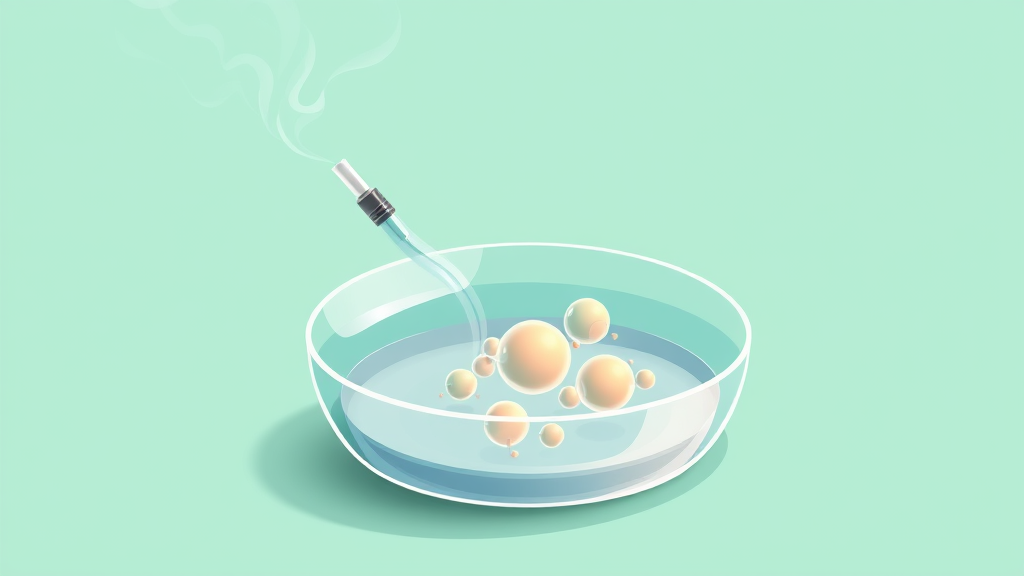

A flavoring chemical used in some e-cigarettes damaged human embryo cells in laboratory experiments, according to findings reported by Reuters. I want to walk you through what the study actually found, because the details matter here. Headlines about vaping research tend to either alarm people unnecessarily or let them off the hook entirely, and this one deserves better than that.
The researchers worked with human embryo cells in a lab setting and exposed them to a flavoring compound found in certain vape liquids. The cells showed damage after exposure. I want to be careful with that sentence, because "damage to cells in a dish" and "harm to a developing pregnancy" are related but not identical things. A petri dish doesn't have a placenta, doesn't have detox pathways, doesn't have the whole complicated architecture of a human body working to protect a growing embryo.
And still. This matters.
I take it seriously anyway, and twenty years of nursing taught me why. Lab findings on embryonic cells are often the first ripple in a much larger pond. A chemical that injures embryo cells directly, in controlled conditions, is a chemical we should want studied aggressively before we assume it's fine. The burden of proof belongs on the product, not on the developing baby. Vaping was marketed for years as the safe alternative, and each year we learn a little more about how incomplete that story was.
The flavoring angle is the part I find most troubling. These are chemicals that were tested and approved for eating, not inhaling. Your gut and your lungs handle compounds very differently. Something harmless passing through your digestive system can behave entirely differently when it's heated, aerosolized, and pulled deep into lung tissue, or in this case, presented directly to embryonic cells. The flavorings exist to make the product appealing, and I'll let you sit with what it means that the appealing part may be the harmful part.
What does this mean if you're pregnant or trying to become pregnant? My guidance is the same advice I'd give my own family: don't vape during pregnancy. Not because one lab study settled the question, but because there is no established safe level of exposure here, and the studies we do have keep pointing in the same discouraging direction. Nicotine itself crosses the placenta. The flavorings add another layer of unknowns. If quitting feels impossible right now, please talk to your doctor or midwife rather than quietly continuing. There is real help available, and asking for it is a sign of good judgment, not weakness.
Linton went through his own health struggles in his twenties, and one thing that period taught me is that people don't change their habits because someone shames them. They change when they get clear, respectful information and real support. So consider this the respectful version: this study adds one more reason to be cautious, especially during pregnancy.
The obvious next step is animal research and eventually human epidemiological studies, to see whether the cell damage seen in the lab translates to developmental harm in actual pregnancies. That follow-up work takes years, and I'll be watching for it. In the meantime, the absence of that data is not the same as evidence of safety.
If you're vaping and pregnant, this is your gentle nudge to have a conversation with a healthcare provider this week. That's not fear-mongering. It's just good sense.
Comments (0)
Log in or sign up to join the conversation.
No comments yet. Be the first.