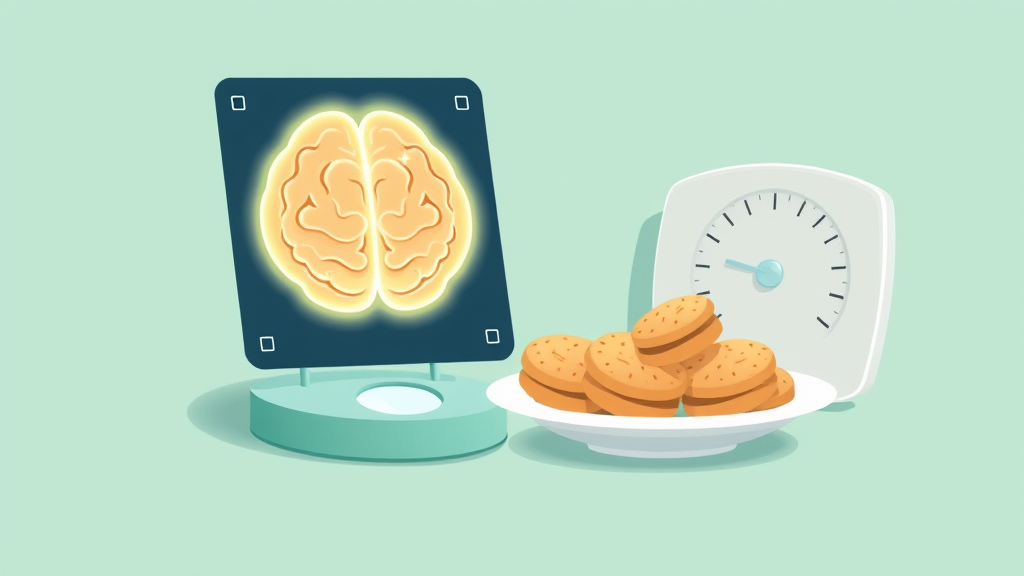

Researchers at Florida International University have found that children as young as four with a higher body mass index show real differences in several brain regions involved in reward processing. It's one of the youngest ages this kind of finding has been documented, and it adds a genuinely useful piece to a puzzle we've been assembling for decades.
The study used brain imaging to compare preschoolers and found that higher BMI was associated with differences in regions that handle reward, impulse control, and how we respond to food cues. These are the same circuits adult obesity research has pointed to for years. Seeing variation this early suggests the brain-weight relationship isn't simply a consequence of years of eating habits piling up. Some of the wiring differences may be there before kindergarten.
What does that actually mean, though, because the headlines around this could easily go sideways. This is not a study saying some toddlers are doomed to obesity, and it is absolutely not a study saying anyone's four-year-old needs a brain scan. What it says is that biological vulnerability to overeating may be partly visible in the brain very early, which reframes obesity as less about willpower and more about physiology. Anyone who's spent time on a hospital floor knows we never treated asthma as a character flaw. Weight deserves the same lens.
I keep thinking about this alongside what I wrote last week on teen BMI and biological aging. The two studies together make a quiet, consistent argument: early childhood is a sensitive window for metabolic health, and what happens in those years echoes forward. The earlier we understand risk, the gentler and more effective the intervention can be. Four-year-olds don't need diets. They need structured meals, sleep, play, and parents who aren't panicking.
And panic is the real hazard with coverage like this. My worry is a parent reading a summary of this study and starting to restrict food or comment on their preschooler's body. Please don't. Restrictive feeding in young children tends to backfire, research has shown it repeatedly, and it can lay groundwork for disordered eating later. Linton went through his own health struggles in his twenties, and I watched how much harder everything got when shame got mixed in with the medical facts. The shame never helped once. Not ever.
So what should you actually do with this information? Mostly the things we already know work. Regular mealtimes instead of constant grazing. Sleep, because short sleep in little ones is reliably linked to higher weight. Limits on ultra-processed snacks that are engineered to hit those reward circuits exactly where they're most sensitive. And family activity that feels like play, not punishment. None of that requires knowing anything about your child's brain regions.
A few caveats, because I'd want you to hear them. This came through a press release, and I haven't read the full paper yet, so I want to see how big the differences actually were and whether the team controlled for things like sleep, family environment, and socioeconomic factors. Brain imaging studies in children this small are hard to do well, and modest group differences can look dramatic in a summary.
Still, the direction of this research matters. It moves us away from blame and toward understanding, and that shift is overdue. A brain that responds more intensely to food cues isn't a broken brain or a bad kid. It's a risk factor, the way a family history of high cholesterol is a risk factor. Something to know, to work with, and to meet with structure and warmth rather than fear.
Comments (0)
Log in or sign up to join the conversation.
No comments yet. Be the first.