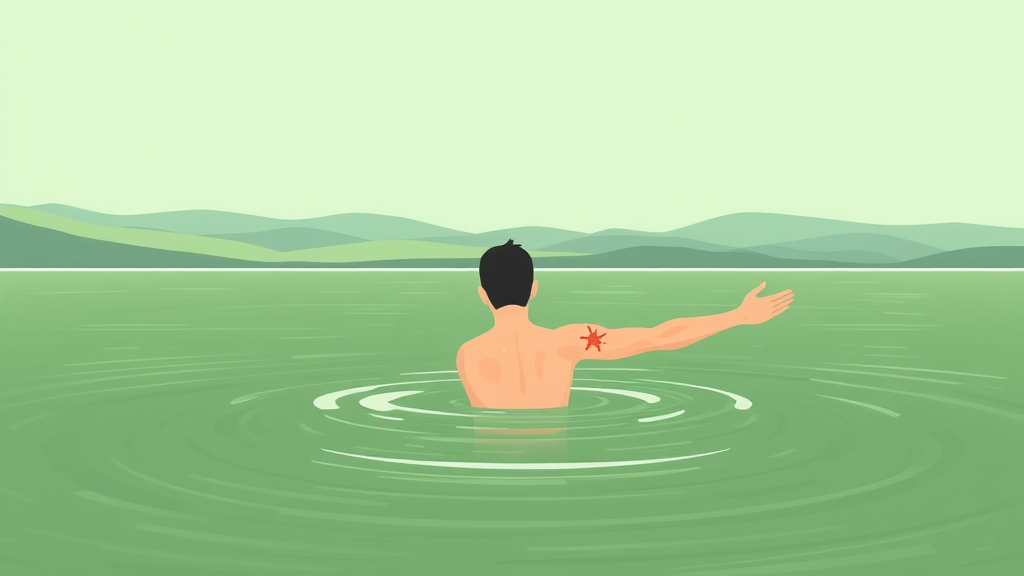

If you've been cooling off in a local river or lake this summer, I have some news that might make you think twice before your next dip. A new analysis found that people who swim in freshwater are roughly twice as likely to end up with skin problems or gastrointestinal illness compared to people who stay out of the water.
The findings, reported by News-Medical, pull together evidence on what happens to our bodies when we swim in rivers, lakes, and other untreated water. The short version: skin conditions like rashes and irritation, plus stomach bugs that can knock you flat for days, both showed up about twice as often in swimmers.
This doesn't surprise me at all. Twenty years of nursing will do that to you. Every summer the same pattern would roll through, people who'd been swimming in a nice-looking lake and showed up a day or two later with diarrhea, or an angry rash that wouldn't settle down. Freshwater looks clean and often is, visually. But rivers and lakes aren't chlorinated, and they collect everything from agricultural runoff to wildlife waste to stormwater after heavy rain.
The stomach bugs usually come from bacteria like E. coli or parasites like Cryptosporidium and Giardia, which thrive in water contaminated by animal or human waste. Even a small mouthful during a vigorous swim can be enough. And the skin issues often come from contact with algae blooms, including blue-green algae, or simply from bacteria entering small cuts and scrapes you didn't know you had.
Now, before you swear off lakes forever, some perspective. This is about relative risk, and the absolute numbers for most healthy swimmers are still low. Plenty of people swim in freshwater every summer and feel fine. My son Linton swam in lakes constantly as a kid, and the worst thing he ever brought home was a leech and a story he told for years.
But there are sensible precautions worth taking, especially if you have young children, older family members, or anyone with a weakened immune system:
Check water quality advisories before you go. Many areas post warnings after heavy rain or during algae blooms. That scummy green film on the surface? Don't swim in it, and keep pets away too, since dogs are especially vulnerable to blue-green algae toxins.
Avoid swimming right after rainfall, when runoff washes contaminants into the water. Waiting 48 to 72 hours after a big storm is a good rule of thumb.
Don't swallow the water. Easier said than done with kids, I know, but it's the single biggest thing you can do.
Cover cuts with waterproof bandages, and shower off after your swim. Simple, but it genuinely reduces the risk of skin infections.
And if you do get sick after swimming, with diarrhea lasting more than a few days, blood in stool, or a rash that spreads or becomes painful, please see a doctor and mention the freshwater exposure. That detail matters more than you'd think for getting the right diagnosis quickly.
I don't want anyone reading this to fear the water. Swimming is wonderful exercise, and cold-water swimming in particular has real wellness benefits I've written about before. The message here is closer to what my old charge nurse used to say: know your water the way you'd know your food. You wouldn't eat a sandwich you found on the sidewalk, so maybe don't swim in water with visible algae or right after a storm.
A little respect for what's living in that water, and you can keep enjoying it all summer long.
Comments (0)
Log in or sign up to join the conversation.
No comments yet. Be the first.