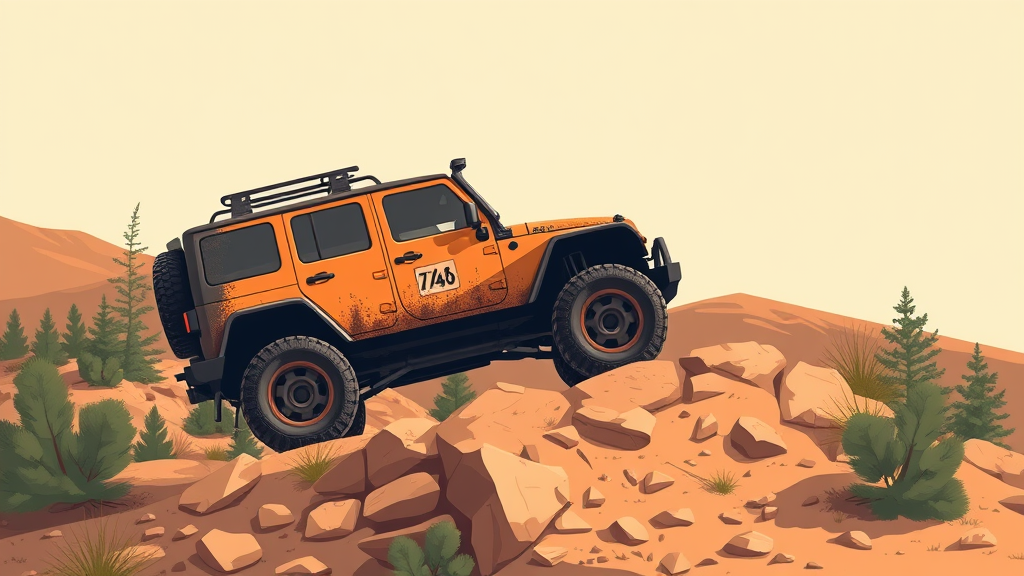

Something's happening out on the trails right now, and if you've spent any time at Moab or Tellico lately you already know what. Off-roading in America is having a massive moment. Sales of rigs meant for real trail use, ATVs, side-by-sides, dedicated 4x4s, are climbing. More people are getting muddy on purpose than have in years. And the vast majority of them are doing it powered by gasoline.
A recent piece over on MSN lays it out pretty plainly. The American off-road scene is roaring back, and it's not particularly interested in going electric anytime soon. The sound, the smell, the whole sensory experience of a gas engine working hard on a rocky climb, that stuff matters to people in a way that goes beyond simple preference. It's cultural.
I get it. I've spent enough time behind the wheel of borrowed EVs on dirt roads to understand the appeal and the limitations. Electric motors deliver instant torque, which is genuinely useful when you're crawling over obstacles. There's a precision to it. But the charging infrastructure question becomes a real problem the second you're more than a gas station's distance from a town, which is, you know, the entire point of going off-road in the first place.
I drove a friend's electric truck up a forest service road in Colorado last summer. Beautiful vehicle, handled the washboard like a dream, and I loved every quiet minute of it. Until I realized I had about 18 percent battery left and was still 30 miles from the nearest charger, which was a Level 2 that would have taken most of the afternoon. I made it back, but barely, and I spent the last hour white-knuckling the range estimate like it owed me money. My buddy's old 4Runner would have done that same trip on a quarter tank without breaking a sweat.
The off-road community has always been a place where people hold onto older technology because it works. Solid axles, manual transmissions, naturally aspirated engines, these aren't retro affectations. They're choices born from decades of trail experience. When you're forty miles from pavement and a part fails, you want something a mechanic in a small town can fix with parts from the local auto store. Good luck finding someone to diagnose a proprietary battery management system in rural Utah.
That practicality cuts deep. The trails I love most are the ones where cell service is a memory and the nearest paved road is an hour of slow technical driving away. Out there, simplicity isn't nostalgia. It's survival logic.
Electric off-roading will get there eventually. The technology is improving fast, and companies are building genuinely capable electric rigs that can handle serious terrain. I've ridden in one. It was impressive. But the infrastructure needs maybe a decade before it catches up to where gas already is, and off-roaders are not a patient demographic when it comes to being stranded.
What excites me about this whole moment isn't the engine debate. It's that more people are getting outside and finding trails and discovering what it feels like to point a vehicle at something that looks impossible and then drive over it. Whether that happens with a V8 rumble or an electric hum, I'll take it. Just maybe pack extra fuel. Or a charger. Or both. Whatever gets you out there.
Comments (0)
Log in or sign up to join the conversation.
No comments yet. Be the first.