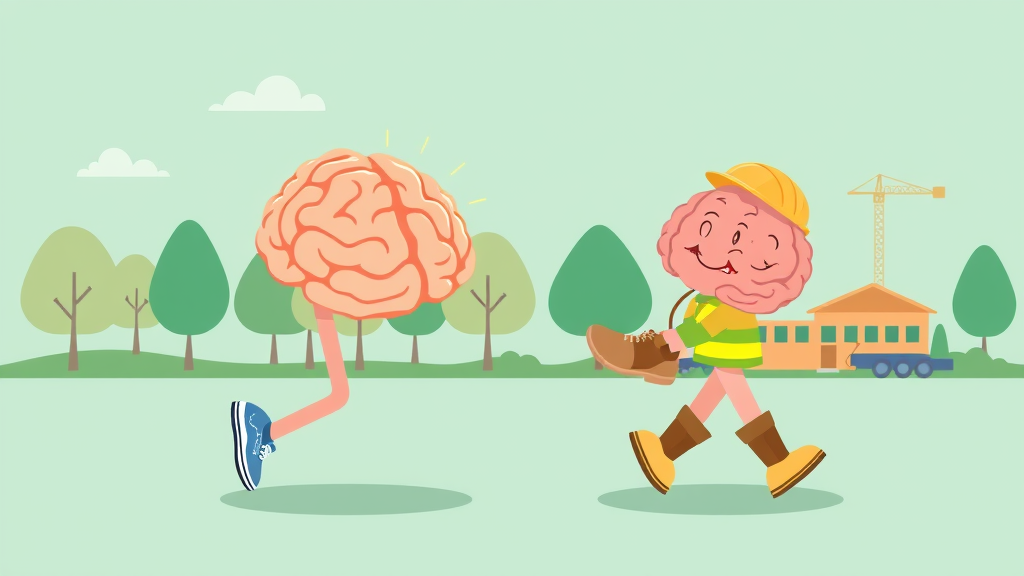

I've told a lot of patients over the years that every bit of movement counts. Walk to the mailbox, take the stairs, park farther away. For general health, that advice still holds up pretty well. But a new study on dementia risk suggests that when it comes to protecting your brain, the type of movement may matter more than we assumed.
Researchers found that people who did higher levels of leisure-time physical activity, meaning exercise they chose to do, had a lower risk of developing dementia. The interesting part is what didn't show the same benefit. Activity done as part of work, or the incidental movement woven through a busy day, didn't appear to protect the brain the same way.
That challenges a comfortable assumption. Public health messaging has leaned for years on the idea that every move counts, and the message stuck because it feels achievable. Nobody wants to hear they need a structured exercise routine. But the brain may not be keeping the same scorecard we imagined.
Why would leisure exercise behave differently from occupational movement? A few possibilities are worth sitting with. Leisure activity tends to be more aerobic and sustained, which improves blood flow and may support clearance of metabolic waste from brain tissue. There's also the enjoyment factor. Exercise you choose, a dance class, a long bike ride, a swim, activates reward pathways and reduces stress in ways that physically demanding but stressful work does not. My years in nursing taught me that a hospital aide doing ten thousand steps on a shift is in a very different physiological state than someone doing ten thousand steps on a hike they planned all week.
And there's the stress piece, which I suspect matters more than we credit. Physically demanding jobs often come with time pressure, low control, and chronic strain. Cortisol running high for years is not a neutral backdrop for the brain.
Now, the caveats, because I read the actual study and just the headline wouldn't do. Studies like this are observational. They show association, not proof of cause. People who exercise in their free time also tend to sleep better, have more social connection, and carry fewer chronic health burdens, and teasing those apart is genuinely hard. It's possible leisure activity is partly a marker of a life with more flexibility and resources in it.
So what do you actually do with this? Don't throw out the everyday-movement advice. It's still good for your heart, your joints, your mood. What I'd add is that if you've been telling yourself your physically demanding job covers your exercise needs, this study suggests it probably doesn't cover your brain. You still need something that's yours. Something deliberate, ideally aerobic, ideally something you'd pick even if it weren't good for you.
I've written before that cognitive health starts with the choices you make in your 40s and 50s, not at 70. This fits that picture. My son Linton turned his health around in his twenties mostly by finding movement he actually enjoyed, and I watched how differently he carried himself once exercise stopped being a chore and started being a choice. Maybe that distinction, chore versus choice, is exactly what this research is picking up on.
Start small if you need to. A brisk walk three times a week that you choose, on purpose, for yourself. Your brain seems to know the difference.
Comments (0)
Log in or sign up to join the conversation.
No comments yet. Be the first.