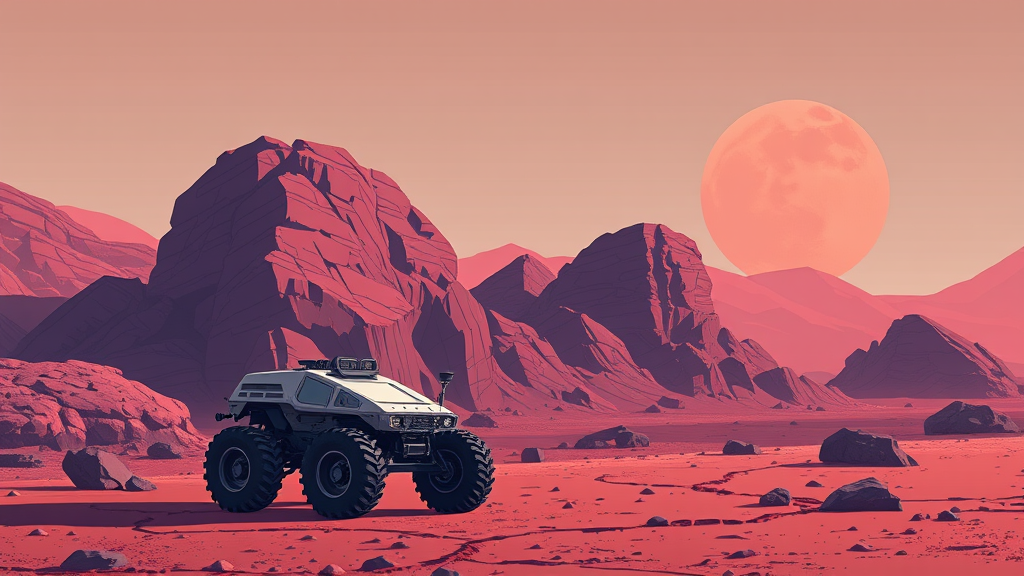

OK so Mars just keeps getting weirder and I am absolutely here for it.
NASA's Curiosity rover, which has been rolling around the Martian surface doing its thing since 2012, just spotted something that nobody expected. A vast stretch of strange, honeycomb-like rock patterns covering the ground in patterns so regular and so weird that scientists had to stop and go "wait, what?"
And when I say vast, I mean it. These formations stretch across a huge area near Mount Sharp in Gale Crater, and they look like someone took a giant cookie cutter to the surface of Mars and just went absolutely wild with it. The patterns are these polygonal, honeycomb shapes carved into ancient sedimentary rock, and they're big. Not little cracks. Not tiny fissures. Whole fields of these things, repeating and repeating.
According to Gizmodo, the patterns likely formed through cycles of wet and dry conditions. So basically Mars used to have water that repeatedly filled and evaporated from this area, and each time it did, the ground cracked and shifted and settled into these geometric shapes. Over eons, those cracks got preserved in the rock record.
Which is incredible when you think about it. These honeycomb patterns are basically a diary of Mars' ancient climate, written in stone, and Curiosity just flipped it open. Scientists say the formations offer real clues about the planet's watery past, which is already fascinating enough on its own.
What gets me really excited though. The fact that Mars went through these repeated cycles of wet and dry tells us the planet's environment was dynamic and changing, not just a static ball of dust. The surface was alive with activity. Water coming and going. Ground cracking and reforming. Something was happening up there, over and over, and now we can see the evidence of it.
And Curiosity just... found them. While driving around. This little car-sized robot that we launched over a decade ago is still out there discovering things that make scientists reconsider what they know about an entire planet's history.
The patterns themselves are genuinely beautiful too. They look almost organic, like cells under a microscope or the structure of a beehive, except they're carved into rock on another planet millions of miles away. NASA shared images of the formations and they have this eerie, almost artistic quality to them. Like Mars decided to do some abstract sculpture and just left it out there for us to find.
Curiosity has been climbing Mount Sharp layer by layer, and each layer tells a different chapter of Mars' past. These honeycomb patterns come from a specific layer that represents a transitional period in the planet's climate history. A time when Mars was shifting from a wetter world to the dry, frozen desert we know today.
That transition left marks. And now we can see them.
I think what I love most about this is that we keep sending robots to Mars expecting one thing and they keep showing us something completely different. Every single mission reshapes the picture. The Mars we thought we knew twenty years ago is not the Mars we know now, and the Mars we'll know in another twenty years will probably blow our minds all over again.
Curiosity is still out there. Still driving. Still looking. Still finding entire landscapes we've never seen before on a planet we've been studying for decades.
Space is so cool I might actually explode.
Comments (0)
Log in or sign up to join the conversation.
No comments yet. Be the first.