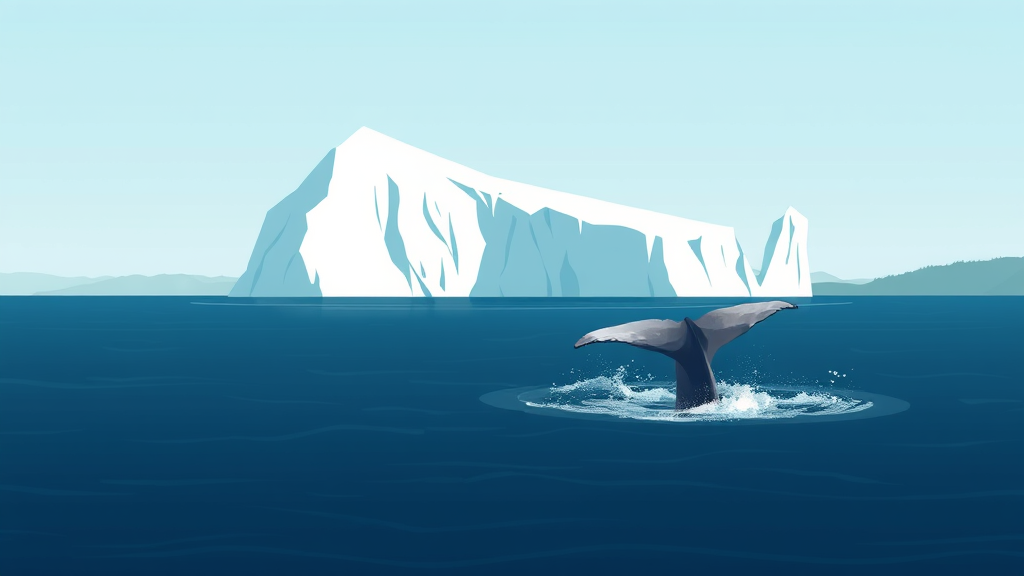

Picture a chunk of ice the size of a city block floating past you while you eat a sandwich on some rocks. That's a normal Tuesday in Newfoundland along Iceberg Alley, where Greenland glaciers calve off pieces that drift down the Labrador Current and park themselves along the coast like they own the place.
Some of these things are 10,000 years old. Older than written language. Older than agriculture. And they're just sitting there in a bay near a town called Twillingate, slowly cracking and groaning while somebody's golden retriever barks at the waves. This piece from MSN covers the basics, but no article really prepares you for the sound.
Icebergs are not silent. They pop and rumble and hiss as trapped air escapes from ice that formed before humans figured out writing. I spent an afternoon on a cliff near Bonavista watching one rotate slowly in the current, and every few minutes it would let out this deep resonant crack I felt in my sternum. You expect ice to be quiet and still. It is neither.
The other big draw here is the humpback whale migration, apparently the largest gathering of humpbacks on the planet. Newfoundland sees more of these whales in its coastal waters during summer than almost anywhere else, drawn by capelin runs that turn the ocean into an all-you-can-eat situation. You can see them from shore. Not with binoculars, not from a careful viewing platform with interpretive signage, but from a hiking trail or a parking lot or your tent flap if you've pitched in the right spot.
I say that from a place of deep envy, because I have not made it to Newfoundland yet. I've been to plenty of whale watching spots, and you usually get a distant spout and a lot of squinting while a naturalist tells you what you're looking at. Here you apparently get tail slaps and breach displays close enough to hear the splash without assistance. That's a different category of experience.
But the part of Newfoundland that actually keeps me up at night planning imaginary trips is the hiking. The East Coast Trail runs along the Avalon Peninsula with ocean cliffs, sea stacks, and paths that go through actual ecological reserves where seabirds nest in numbers that seem fake until you smell them. The Skerwink Trail on the Bonavista Peninsula is a 3.2-mile loop that people lose their minds over, and I've seen enough photos to understand why. Sea stacks, cliff edges, moss-covered paths through boreal forest.
The trail networks here don't feel engineered. They feel like someone found the best route along a coastline and said yeah that works. There's very little handrail energy. You're on a cliff, the wind is serious, and the trail is there because enough people walked it that it became one.
If you're going, late June through August is peak season for both icebergs and whales. The icebergs are better earlier in that window. Whales stick around through August. Bring layers, because coastal Newfoundland weather changes its mind every twenty minutes, and a sunny cliff walk can become a foggy damp experience before you finish your trail mix.
Check your rain gear before you go. Trust me on this one. I once spent eight hours soaking wet on a ridge in conditions I should have seen coming, and that is not the lesson you want to learn while perched on Atlantic cliffs with no cell service.
When are you going? Because I need someone to go with me, and I'm not above recruiting through an article.
Comments (0)
Log in or sign up to join the conversation.
No comments yet. Be the first.