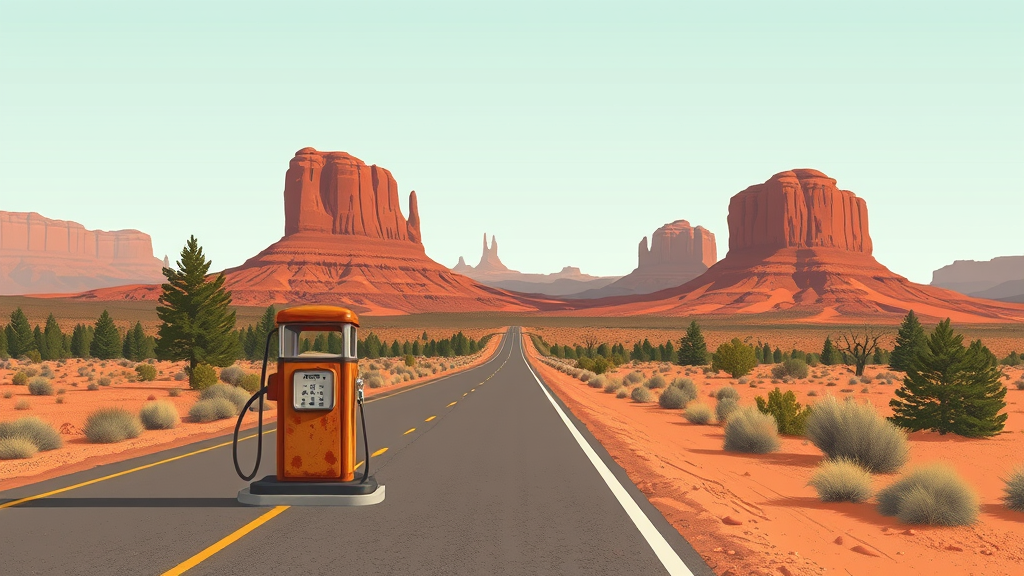

If you've ever watched Cars and thought Radiator Springs felt weirdly familiar, like maybe you've driven through it in real life, you weren't imagining it. Animators from Pixar recently opened up about how Utah's roads and red rock country shaped the look of the movie, and honestly it explains a lot.
According to KSL's reporting, the Pixar team took research trips along the same corridors a lot of us have driven: Route 66 alignments, the stretches of southern Utah, the long two-lanes where the buttes stack up on the horizon like somebody arranged them. The fictional Carburetor County is basically a love letter to that country. The mesas, the cutbanks, the way the light goes orange at the end of the day, none of that was invented at a desk in Emeryville. They went and looked at it.
That's the part I appreciate. I've driven those roads, and there's a specific feeling you get out there that's hard to fake. It's the feeling of a town that used to be busier. A gas station with a hand-painted sign. A diner where the pie case matters more than the menu. My own read on the movie, for what it's worth, is that Cars works because it's an argument for slowing down, for the old road over the interstate, and I don't think you write that story convincingly from a cubicle. I'd say you have to pull off somewhere like Seligman or Torrey yourself and feel it. But that's me talking, not the animators.
Speaking as someone who's spent a fair amount of time in canyon country, the rock itself is half the show. The layering, the way the strata band red and cream and grey. My first trip through Monument Valley I stopped the car maybe six times in twenty miles because the light kept changing and every stop looked better than the last. Twelve-ish stops if you count the ones where I just stood there not taking a photo, which is its own category.
If this news makes you want to see the real thing, Utah delivers, and late September into October is my favorite window. The crowds thin out after Labor Day, the cottonwoods start turning along the rivers, and the heat stops trying to kill you. If you're routing a trip, Moab makes a good base for Arches and Canyonlands, but don't sleep on the smaller stuff. Capitol Reef, around Torrey, gets you the same red rock with maybe a quarter of the traffic. And the Scenic Byway 12 stretch between Torrey and Bryce is one of the best drives in the country, and I'll fight about that.
Bring more water than you think you need. Real shoes, not flip-flops, because the rock is abrasive and it doesn't care about your vacation plans. Fill up on gas when you see a station, because the distances between towns out there are not a joke. The same advice basically applies to the movie's desert, if you think about it, except Mater never seems to worry about fuel.
The thing is, the best road trip scenery in America isn't hidden. Pixar didn't have to dig for it. They drove the roads, pointed cameras at Utah, and built a movie around what they found. You can do the same trip without the animation budget.
Just don't expect the tractors to talk.
Comments (0)
Log in or sign up to join the conversation.
No comments yet. Be the first.