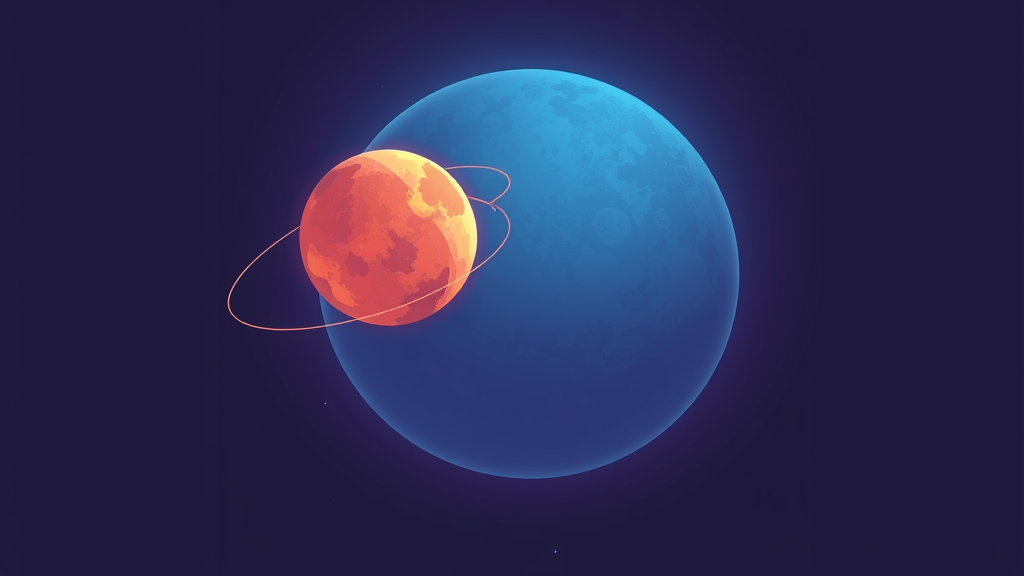

OK so scientists have officially cracked a mystery they've been calling the 'cosmic fart' and yes, that is the actual nickname, and yes, I am delighted. It involves a zombie star. It involves X-ray flares that flicker like someone messing with a light switch. And it involves Einstein, which, come on, best kind of surprise.
Let me back up. The object at the center of this is a neutron star, which is basically the leftover core of a star that exploded. It didn't fully die though. It just... persists. hence zombie star. And it's not alone up there, it has a companion star, a massive blue one called Wray 977, and the two of them together are what set off the whole light show.
The weird part, the part that had researchers scratching their heads for ages, is that the X-ray flares coming from this system kept pulsing at strange intervals. On. Off. On. Off. Not a clean rhythm, more like a sputter. Someone along the way nicknamed the behavior the cosmic fart and, you know what, the name stuck, because of course it did. Science nicknames are always either extremely elegant or extremely middle school and there is no in between. I have my guesses about how this one came about and so do you, but the origins are lost to the ether, which feels right somehow.
Anyway. The answer, laid out in coverage of the new findings, comes down to wobbling. The neutron star is precessing, which is the same motion a spinning top makes when it starts to tilt and wander around, and that wobble changes how the flares reach us. When the geometry lines up just right you get a flare. When it doesn't, silence. Flicker. Sputter. Cosmic fart.
And the part that made me sit up straighter: the explanation runs through Einstein's general relativity. The star's gravity is so intense that space itself is warped around it, and that warping shapes how the flares pulse. So every sputter from this dead star is a little confirmation of relativity doing its thing. Einstein called it a century ago without ever seeing a single flare.
I love stories like this because of the scale of it. A wobble smaller than anything you could watch with your eyes, on the corpse of a star in deep space, and we figured it out from here. With math. Someone looked at a flickering dot in telescope data and said 'I bet that's spacetime being bent' and then checked, and then was RIGHT.
The universe keeps doing this. Being weird in a way that sounds made up until the numbers hold. Zombie stars, gas sputters, bent spacetime, a nickname that would make a fifth grader giggle. all of it real. all of it documented by people who spent years on it.
Joy is worth documenting, and so, apparently, are cosmic farts. Science, never change.
Comments (0)
Log in or sign up to join the conversation.
No comments yet. Be the first.