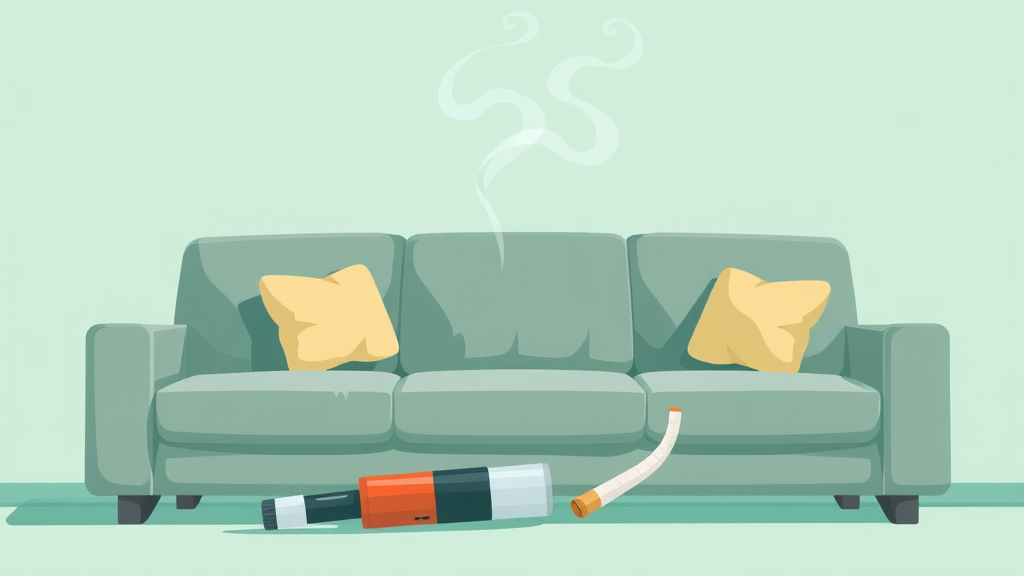

If you swapped cigarettes for a vape around your kids thinking it was the safer choice for their lungs, new research has some uncomfortable news. A study presented this week found that children exposed to secondhand e-cigarette vapor were just as likely to suffer an asthma attack as children exposed to traditional cigarette smoke. Just as likely, not a little less risky.
The findings, reported by Talker News, come from researchers analyzing data on children with asthma living in households where someone vapes or smokes indoors. The comparison held up even after accounting for other factors, and that's the part that stopped me.
I want to explain why this matters, because I think a lot of well-meaning parents genuinely don't know it. An e-cigarette doesn't produce smoke, it produces an aerosol. That aerosol contains fine particles, nicotine, flavoring chemicals, and propylene glycol. When a child with asthma breathes that in, those particles irritate the airways the same way tobacco smoke particles do. Asthma is at its core an airway inflammation problem, and the lungs don't much care whether the irritant came from burning tobacco or heating a flavored liquid.
I spent twenty years in healthcare, and I remember when vaping first showed up as the "safer" alternative. For adult smokers switching completely, that argument still has some merit. But secondhand exposure is a different question entirely, and this study suggests parents have been giving themselves more credit than the evidence supports.
There's also a lingering myth that vapor just disappears harmlessly. It doesn't. Those ultrafine particles hang in the air and settle on surfaces. My son Linton will tell you I was strict about this kind of thing when he was growing up, maybe too strict some days, but airway irritants around kids with breathing problems was never a place I compromised.
Now, some honest caveats, because that's how I do this. I've read the coverage, not the full paper yet, and I want to see the effect sizes and how the researchers measured exposure. Self-reported household vaping can be underreported, and kids with more severe asthma may live in households that differ in other ways too. But the direction of this finding fits with what we already know about particulate exposure and pediatric asthma, so I'd be surprised if it evaporates under scrutiny.
And I do want to be clear about one thing: quitting nicotine entirely is the goal, not just moving it outdoors. But if you're not ready to quit, take it outside, every time, and don't vape in the car with kids. No exceptions.
If your child has asthma and someone vapes in your home, this is worth a conversation with their pediatrician, and worth a conversation with the vaper, too. Framing it as protecting the child's lungs rather than judging the habit tends to go over better. Trust me on that one.
I'll follow up when the full study is published and we can see the actual numbers. For now, the message is simple: that strawberry-scented cloud is not innocent air.
Comments (0)
Log in or sign up to join the conversation.
No comments yet. Be the first.