
OK so this one is a little heavier than my usual fare, but it is also one of the most incredible science stories I have ever read and I need to talk about it immediately.
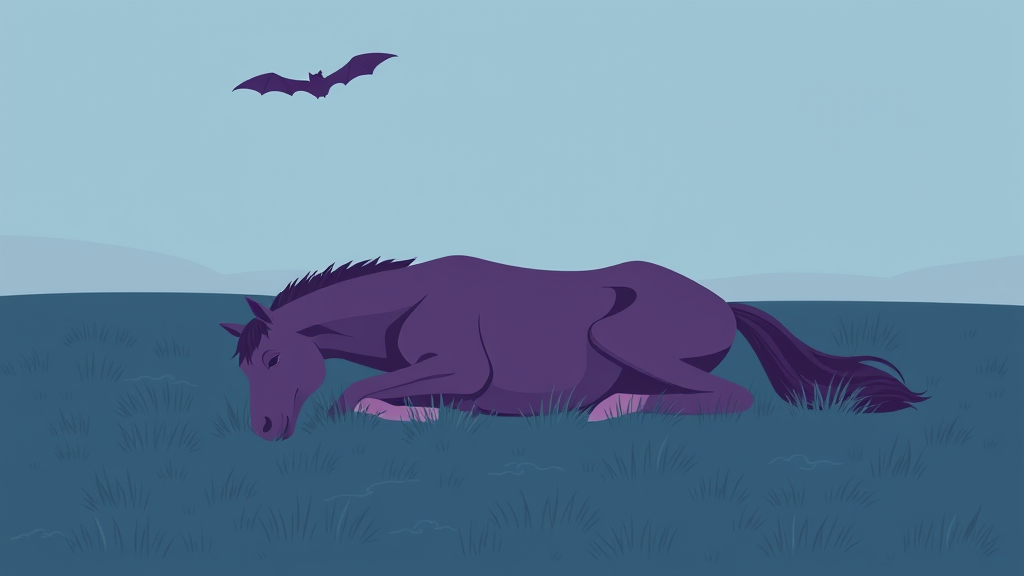
In 1994, horses started dying in a suburb of Brisbane, Australia. Like, really dying. Fast. Respiratory distress, neurological symptoms, complete collapse. A trainer lost horse after horse in a matter of days. Then he got sick. Then he died.
A veterinarian who had been treating the horses also fell ill. She survived, barely. And the thing that caused all of this? It had never been seen in humans before. It came from bats.
The virus was eventually named Hendra, after the suburb where the outbreak started. and according to a fascinating new book extract published in The Guardian, scientists now think this moment was one of the first real warning signs for a whole new era of animal-to-human disease spillover. The era that would eventually give us SARS, MERS, and COVID-19.
here is what blows my mind about this story. Bats had been carrying this virus for a long, long time. Maybe far longer than anyone realizes. They were fine. They are always fine. Bats are basically flying reservoirs of viruses that don't bother them at all, and they have wild immune systems that let them coexist with pathogens that would absolutely wreck other mammals.
The problem started when humans started changing the landscape around the bats. Deforestation, urban expansion, habitat loss. The flying foxes (which are, yes, a type of bat, and yes, they are as big as a small dog, and yes, I am terrified and impressed) started losing their food sources. So they started showing up closer to human settlements. Closer to horses.
And horses are what scientists call amplifying hosts. The virus jumps from bat to horse, multiplies, and then becomes infectious enough to jump from horse to human. Without the horse in the middle, humans might never have been exposed at all.
Between 1994 and today, there have been multiple Hendra outbreaks in Australia. The case fatality rate in humans is about 60 percent. That is a terrifying ratio. Researchers eventually developed a vaccine for horses, which is great news, but the bigger picture the virus revealed is what really stuck with me.
Because the scientists in this extract make a point that gave me full-body chills. They say Hendra was one of the first clear signals that the boundary between animal diseases and human diseases was breaking down. Not in some far-off hypothetical future. In 1994. In a wealthy, developed country with excellent healthcare infrastructure.
The same pattern kept repeating. A virus sitting quietly in an animal population for centuries. Human activity disrupts that population. Contact increases. Spillover happens. And suddenly a pathogen that has never encountered a human immune system is tearing through communities with no natural defense against it.
The researchers in Australia were among the first to connect these dots in real time. They watched it happen with Hendra. Then with Nipah in Malaysia, another bat virus that jumped to pigs and then to humans. Then with SARS. Then MERS. Then, eventually, SARS-CoV-2.
What I keep thinking about is how this story sits right where "nature is incredible" meets "nature is terrifying." Bats are amazing. Their immune systems are a scientific marvel. They pollinate plants and disperse seeds and they are absolutely crucial to ecosystems across the planet. They are not the villain of this story.
If there is a villain, it is the ecological disruption that keeps shoving species into proximity with each other in ways that were never supposed to happen. The bats didn't move closer to us because they wanted to. They moved because we left them nowhere else to go.
I don't usually cover stories like this. but sometimes a piece of science writing is just so good and so important that you have to pass it along. So go read the full extract. And maybe be a little nicer to the next bat you see. They are dealing with a lot.
Comments (0)
Log in or sign up to join the conversation.
No comments yet. Be the first.